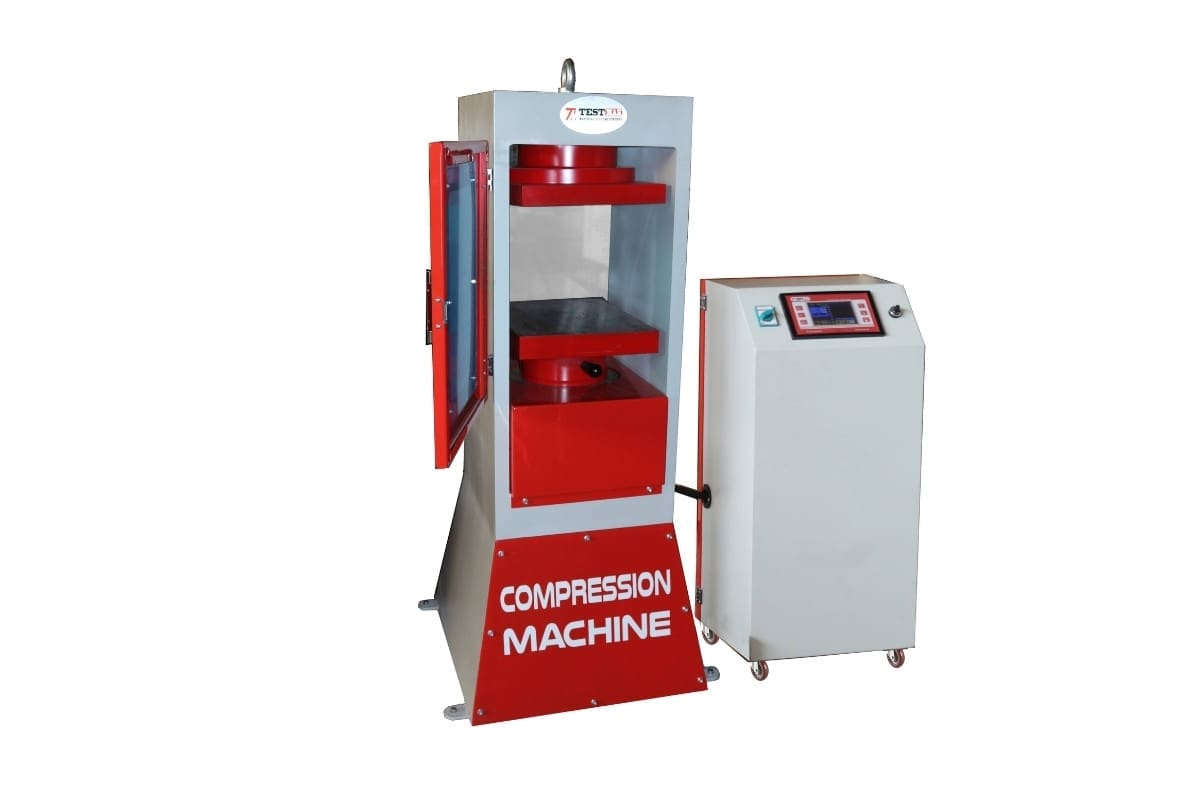
Global Lab Advantage.
Accredited facility.
Standards compliance.
Experienced analysts.
Fast, reliable reporting.
Field + Lab capability.
The cube and cylinder compression test verifies whether concrete has achieved the characteristic compressive strength assumed during structural design. This confirmation is essential to ensure that columns, beams, slabs, and foundations are capable of carrying their intended loads without overstress or premature failure.
Regular compression testing provides ongoing quality control throughout concreting operations. It helps identify issues related to batching inaccuracies, excess water addition, poor compaction, or inadequate curing at an early stage, allowing corrective actions before structural safety is compromised.
Compressive strength directly governs the load-carrying ability of concrete elements. Reliable cube and cylinder test results give engineers confidence that the constructed elements will perform safely under service loads, limiting cracking, deformation, and long-term distress.
Cube and cylinder test results are universally accepted by consultants, regulatory authorities, and courts as objective evidence of concrete performance. They form the basis for acceptance or rejection of concrete works and are critical in resolving quality disputes or contractual claims.
NDT TESTING
Accredited Facility: NABL-accredited laboratory with traceable calibration and stringent Quality System procedures.
Compliance with Standards: Tests conducted in accordance with relevant IS/ASTM/RILEM/EN standards.
Experienced Personnel: Technologists and experts who interpret results and recommend mitigation strategies.
Rapid and Reliable Reporting: Valid reports that comply with relevant standards.
Testing Capabilities: Lab and on-site testing, along with post-test consulting services.
Accredited facility.
Standards compliance.
Experienced analysts.
Fast, reliable reporting.
Field + Lab capability.
Applications
Routine quality control of concrete in residential, commercial, and industrial construction.
Verification of concrete grade for structural elements such as slabs, beams, columns, and foundations.
Acceptance testing for ready-mix concrete and site-batched concrete.
Validation of concrete mix designs and material performance.
Compliance checks for regulatory approvals and third-party audits.
NABL Accredited
Advanced Lab & Field Testing
Fast Turnaround Reports
Digital Data & Traceability
On-Site Testing Across India
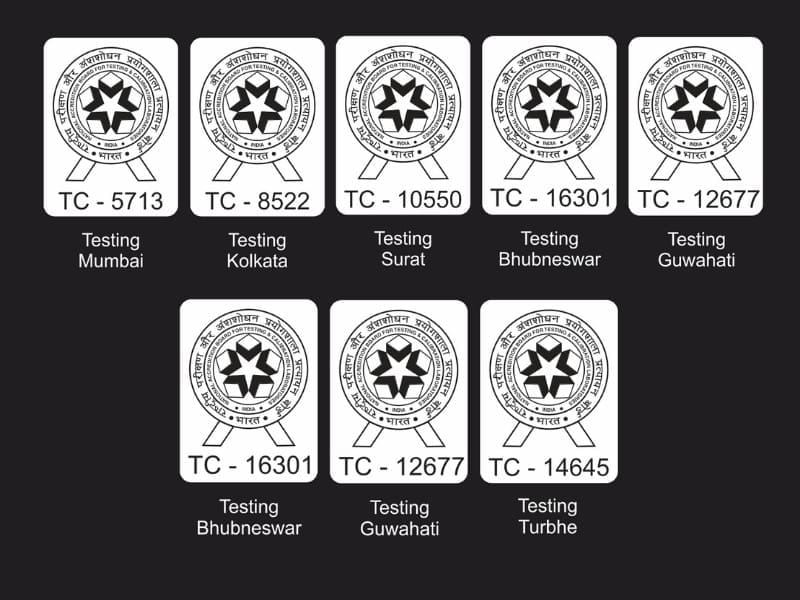
Global Lab provides comprehensive testing for construction and engineering materials, including concrete, cement, steel, aggregates, bitumen, soil, tiles, paver blocks, and other civil and infrastructure materials. We also handle customized tests as per client or project specifications.
Material testing ensures that every component used in a structure meets the required strength, durability, and safety standards. It helps prevent structural failures, ensures long-term performance, and guarantees compliance with national and international standards.
Yes. Global Lab is an NABL-accredited and ISO-certified facility. All our tests are carried out in accordance with the latest IS, ASTM, BS, and EN standards to maintain accuracy, reliability, and traceability of results.
Yes. Our team is equipped with mobile testing facilities and field instruments for on-site sampling, inspection, and testing — ensuring quick and reliable results without disrupting your project timelines.
We follow a wide range of standards including IS (Bureau of Indian Standards), ASTM (American Society for Testing and Materials), BS (British Standards), and EN (European Norms) — depending on project or client requirements.
Yes. We provide digital test reports with QR-code verification, ensuring easy access, authenticity, and transparency for clients, consultants, and contractors.
With years of experience, NABL accreditation, and thousands of successful test reports delivered, Global Lab has built a reputation for accuracy, transparency, and technical integrity. Our results are accepted by top builders, government bodies, and consultants across India.
Global Lab serves a broad range of industries — including construction, infrastructure, real estate, government projects, precast manufacturers, RMC plants, and consultants — offering reliable testing, calibration, inspection, and proficiency services.
Adding {{itemName}} to cart
Added {{itemName}} to cart