
Rebar Mapping Test
(GPR Reinforcement Layout Detection)
Ground Penetrating Radar (GPR) scanning to accurately map the location, depth, spacing and condition of reinforcing bars in concrete — delivering complete reinforcement layout plans without any drilling or coring.
What is the Rebar Mapping Test?
The Rebar Mapping Test uses Ground Penetrating Radar (GPR) to scan through concrete and produce detailed maps showing the position, depth, spacing and continuity of reinforcing bars. GPR transmits short pulses of electromagnetic energy into the concrete; the pulses reflect off rebar and other embedded objects, and the return signals are processed to generate a real-time image of the reinforcement layout.
Conducted as per ASTM D6432, rebar mapping is the definitive method for locating reinforcement before drilling, coring, cutting or anchor installation — preventing costly rebar strikes. It is also used for as-built verification, structural condition assessment and forensic investigation when drawings are unavailable. Global Lab uses GSSI SIR-4000 and Proceq GP8000 GPR systems capable of detecting rebar up to 600mm depth with ±5mm positional accuracy.
Rebar Mapping Test — Site Images
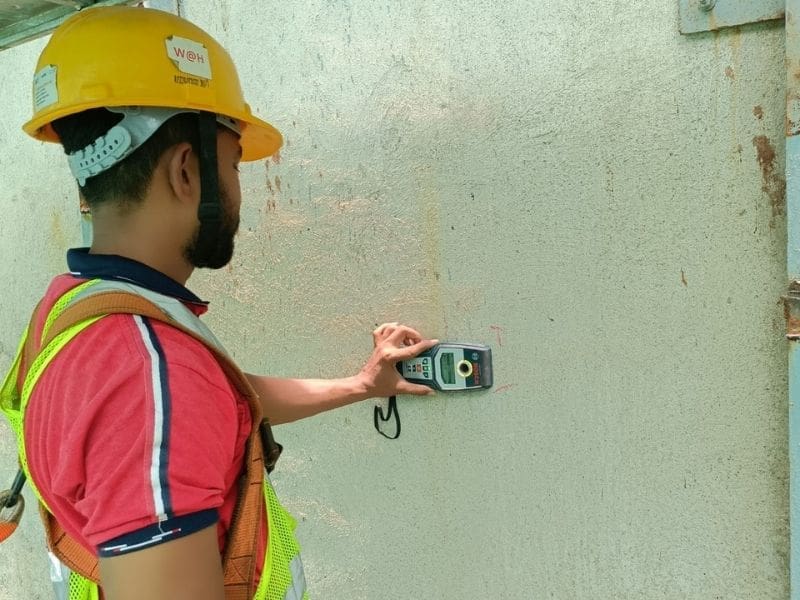
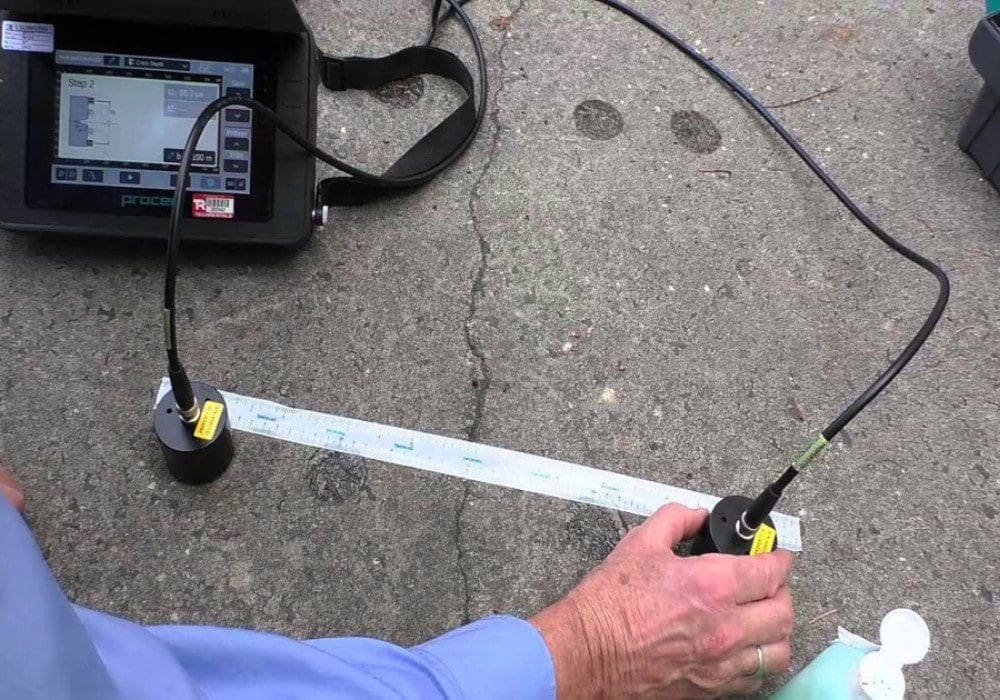
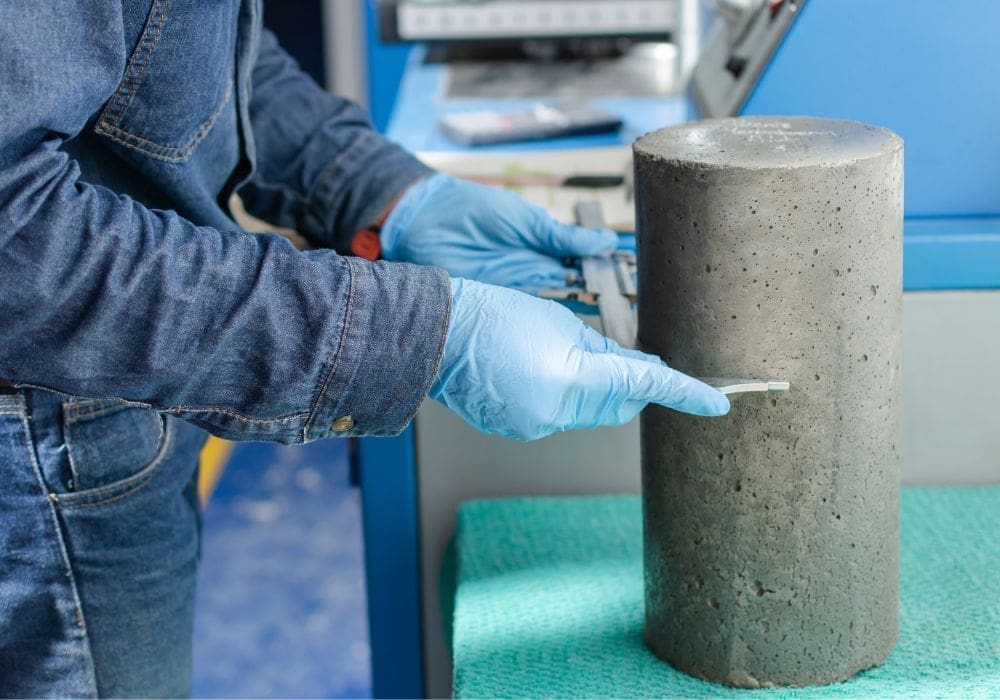
How the Rebar Mapping Test is Conducted
-
1GPR System CalibrationGSSI or Proceq GPR antenna (1.6GHz or 2.6GHz) is calibrated for the expected slab thickness, rebar size and concrete dielectric constant.
-
2Reference Grid LayoutA reference grid is marked on the concrete surface using chalk lines to correlate GPR scan lines with physical locations for the final map.
-
3Systematic X–Y Grid ScanningThe GPR antenna is moved along scan lines in both X and Y directions, recording continuous hyperbolic reflections from embedded rebar and objects.
-
4Data Processing and InterpretationRaw GPR data is processed using RADAN or equivalent software to extract rebar positions, depths and spacings. Anomalies flagged.
-
5Annotated Rebar Map and NABL ReportA scaled rebar layout map showing bar positions, depths, spacings and anomalies is generated and issued as a NABL-accredited report within 48 hours.
Applicable Test Standards
| Standard | Title | Scope | Type |
|---|---|---|---|
| ASTM D6432 | Standard Guide for Using the Surface Ground Penetrating Radar Method for Subsurface Investigation | GPR Survey | ASTM |
| BS EN 12504-4 | Testing Concrete in Structures — Determination of Ultrasonic Pulse Velocity | NDT Reference | British Standard |
| IS 13311 | Methods of Non-Destructive Testing of Concrete — Recommendations | General NDT | Indian Standard |
| ACI 228.2R | Report on Nondestructive Test Methods for Evaluation of Concrete in Structures | NDT Report | ACI |