
Cube & Cylinder Compression Test
(Concrete Compressive Strength)
Compressive strength testing of standard concrete cube and cylinder specimens — the most fundamental quality control test for concrete, mandatory on every construction project per IS 456.
What is the Cube & Cylinder Compression Test?
The Concrete Cube and Cylinder Compression Test measures the compressive strength of concrete by crushing 150mm cubes or 150×300mm cylinders in a calibrated Compression Testing Machine (CTM). Results at 7 and 28 days provide the primary quality control data for concrete acceptance per IS 456.
Conducted as per IS 516 and ASTM C39, cube/cylinder testing is mandatory for every concrete pour on every project. Global Lab provides a complete service — cube collection from site, curing in our controlled curing tank, testing at 3/7/28 days and NABL-certified reports via the Autovity platform.
Cube & Cylinder Compression Test — Site Images
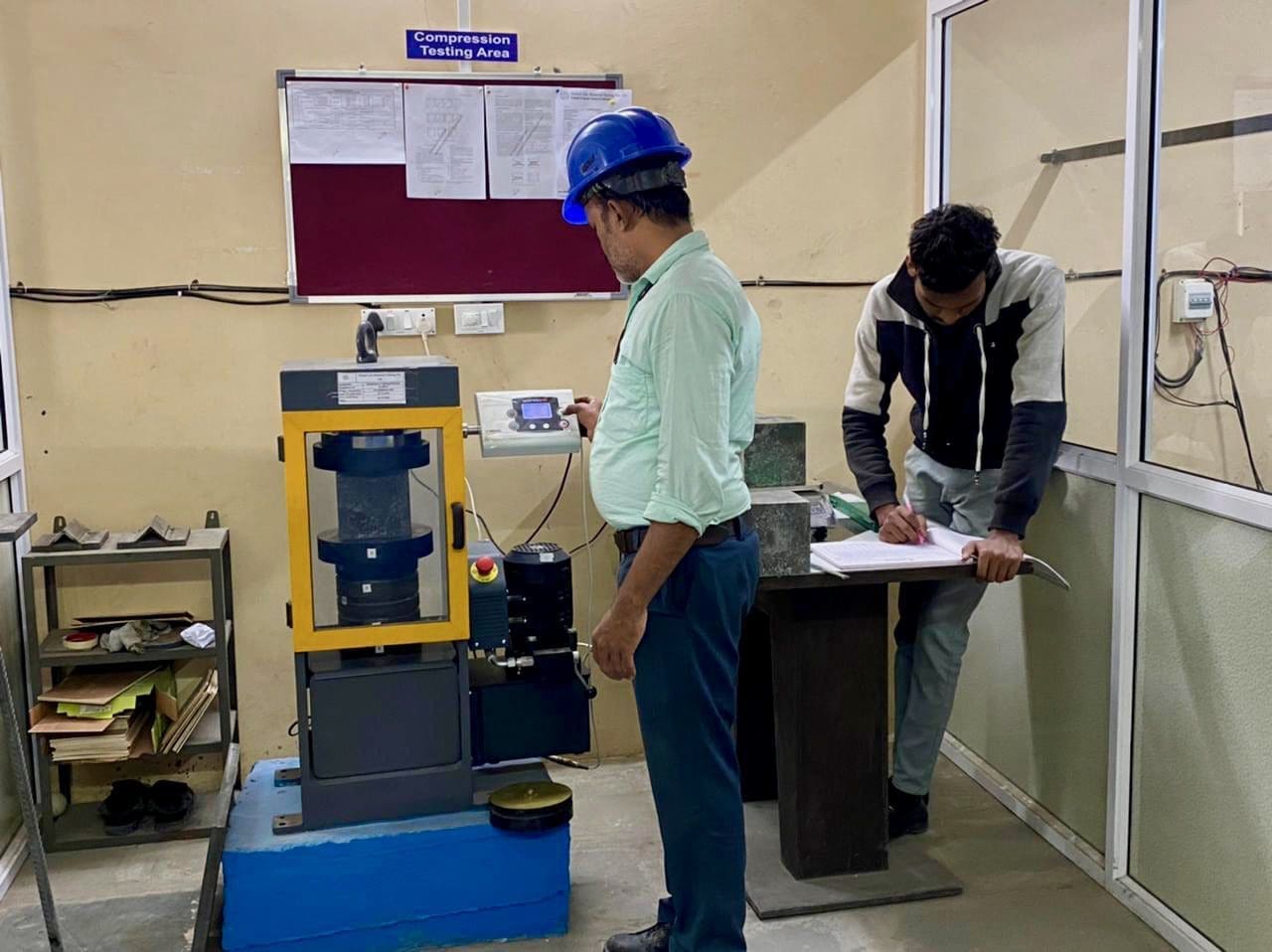
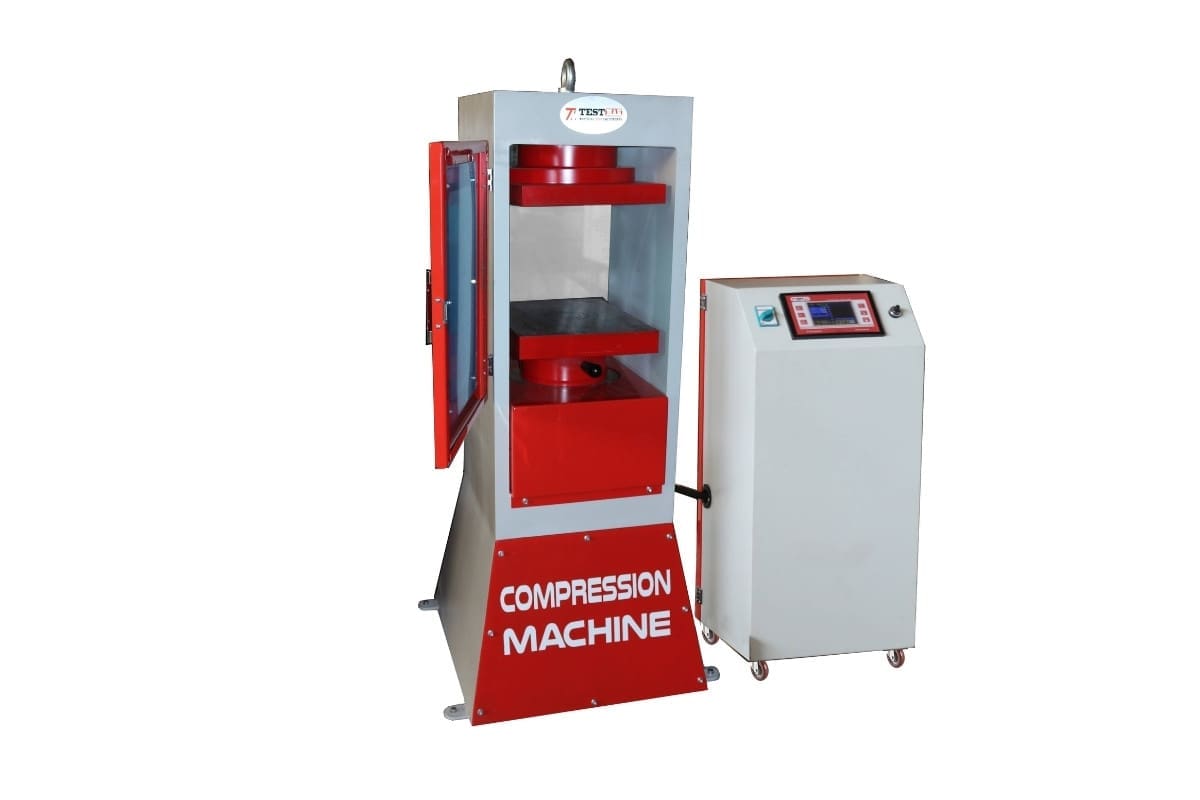
How the Cube & Cylinder Compression Test is Conducted
-
1Cube Casting150mm steel moulds cleaned, oiled and filled in 3 layers. Each layer compacted with 35 strokes of tamping rod per IS 516.
-
2Initial CuringCubes covered with wet hessian for 24 hours. Demoulded after 24 hours and marked with unique identification.
-
3Water CuringCubes immersed in curing tank at 27±2°C until test age (3, 7 or 28 days) per IS 516.
-
4Compression TestingCube placed in CTM with cast face perpendicular to loading. Load applied at 140 kg/cm²/min until failure.
-
5Strength Calculation & ReportCompressive strength = failure load / cross-sectional area. Statistical analysis per IS 456 Cl. 16. NABL report uploaded to Autovity.
Applicable Test Standards
| Standard | Title | Scope | Type |
|---|---|---|---|
| IS 516 | Methods of Tests for Strength of Concrete | Cube Compression | Indian Standard |
| IS 456:2000 | Plain and Reinforced Concrete — Code of Practice | Acceptance Criteria | Indian Standard |
| ASTM C39 | Standard Test Method for Compressive Strength of Cylindrical Concrete Specimens | Cylinder Test | ASTM |
| BS EN 12390-3 | Testing Hardened Concrete — Compressive Strength of Test Specimens | Cube/Cylinder Test | British Standard |