
Masonry Deformability Properties Test
(Double Flat Jack Test)
In-situ determination of elastic modulus and deformability of existing masonry using the double flat jack test — essential for structural assessment and seismic retrofitting of historic masonry.
What is the Masonry Deformability Properties Test?
The Masonry Deformability Properties Test uses the double flat jack method to determine in-situ elastic modulus of masonry walls. Two flat jacks inserted in horizontal mortar joints are pressurised, and the resulting deformation measured to calculate elastic modulus — the primary structural parameter for masonry design and seismic assessment.
Conducted as per ASTM C1197, this test is essential for structural assessment of existing masonry — particularly historic structures and unreinforced masonry buildings evaluated for seismic retrofit. Global Lab conducts double flat jack tests as part of comprehensive masonry structural assessment.
Masonry Deformability Properties Test — Site Images
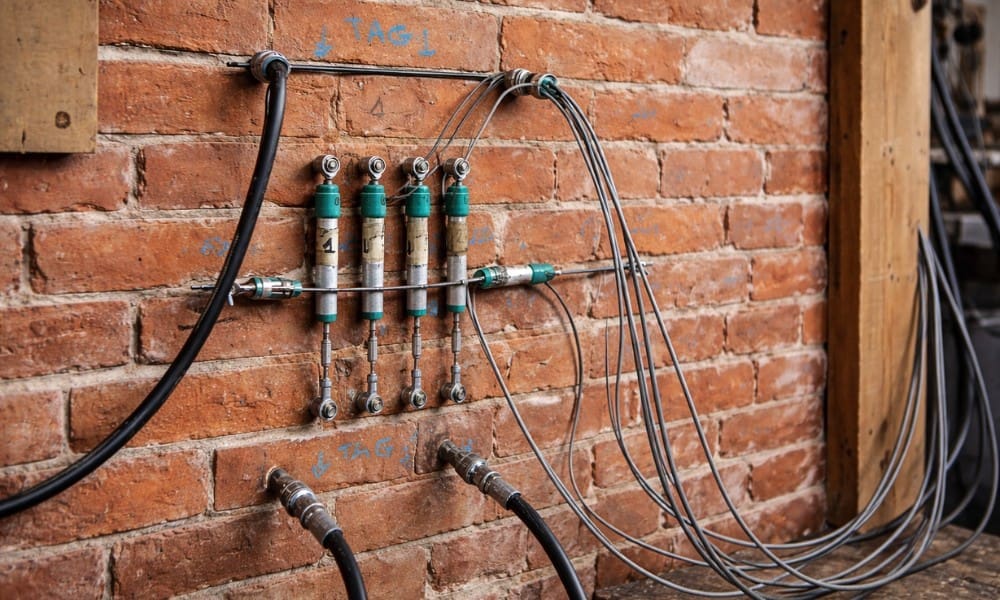
How the Masonry Deformability Properties Test is Conducted
-
1Slot CuttingTwo horizontal slots cut in masonry mortar joints above and below test section.
-
2Flat Jack InsertionCalibrated flat jacks inserted into slots. Reference pins installed for displacement measurement.
-
3Pressure ApplicationHydraulic pressure applied to flat jacks in increments. Pressure-deformation recorded.
-
4Deformation MeasurementRelative displacement between reference pins measured by DEMEC gauges.
-
5Elastic Modulus CalculationStress-strain curve plotted. Elastic modulus calculated. NABL report within 48 hours.
Applicable Test Standards
| Standard | Title | Scope | Type |
|---|---|---|---|
| ASTM C1197 | Standard Test Method for In Situ Measurement of Masonry Deformability Properties Using the Flat Jack Method | Flat Jack Test | ASTM |
| ASTM C1196 | Standard Test Method for In Situ Compressive Stress Within Solid Unit Masonry | Single Flat Jack | ASTM |
| IS 1905 | Code of Practice for Structural Use of Unreinforced Masonry | Masonry Design | Indian Standard |
| IS 1893 | Criteria for Earthquake Resistant Design of Structures | Seismic Assessment | Indian Standard |