
Pile Vertical Load Test
(Static Load Test)
Static vertical compression load test on piles to determine ultimate load capacity and load-settlement behaviour — the gold standard for pile acceptance testing on infrastructure projects.
What is the Pile Vertical Load Test?
The Pile Vertical Static Load Test is the most reliable method for determining the actual load-carrying capacity of a pile. A known static load is applied in increments to the pile head using a hydraulic jack reacting against kentledge or anchor piles, and the resulting settlement is measured precisely at each load increment.
Conducted as per IS 2911 Part 4 and ASTM D1143, this test provides actual load-settlement curves used for design verification and acceptance. Global Lab conducts static load tests using calibrated hydraulic jacks, load cells and precise dial gauge/LVDT settlement measurement systems.
Pile Vertical Load Test — Site Images
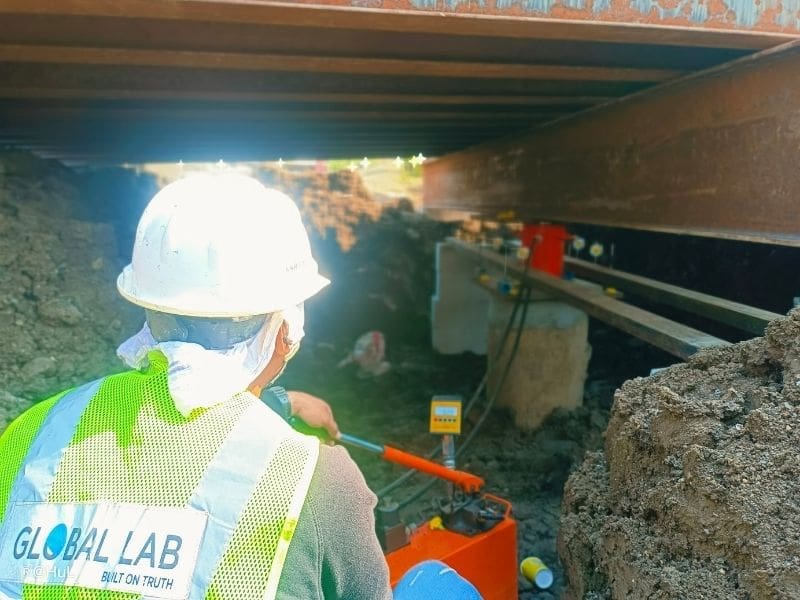
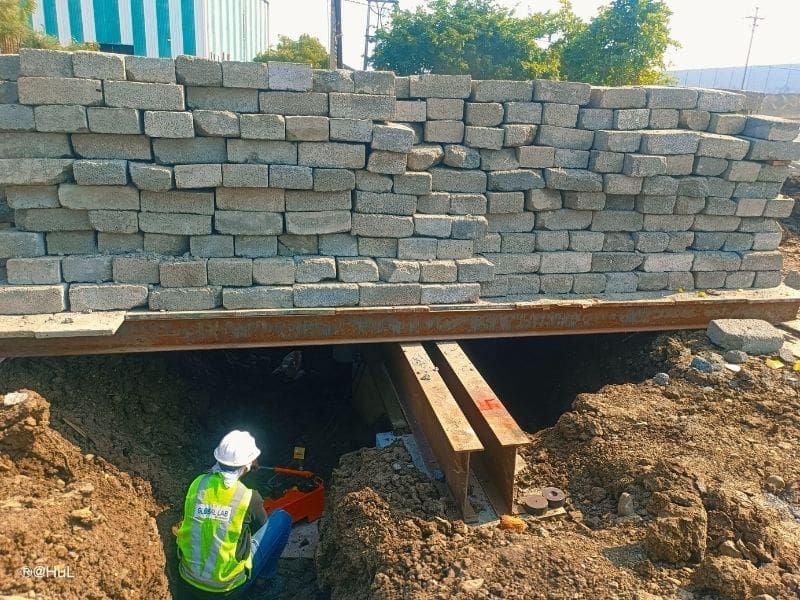
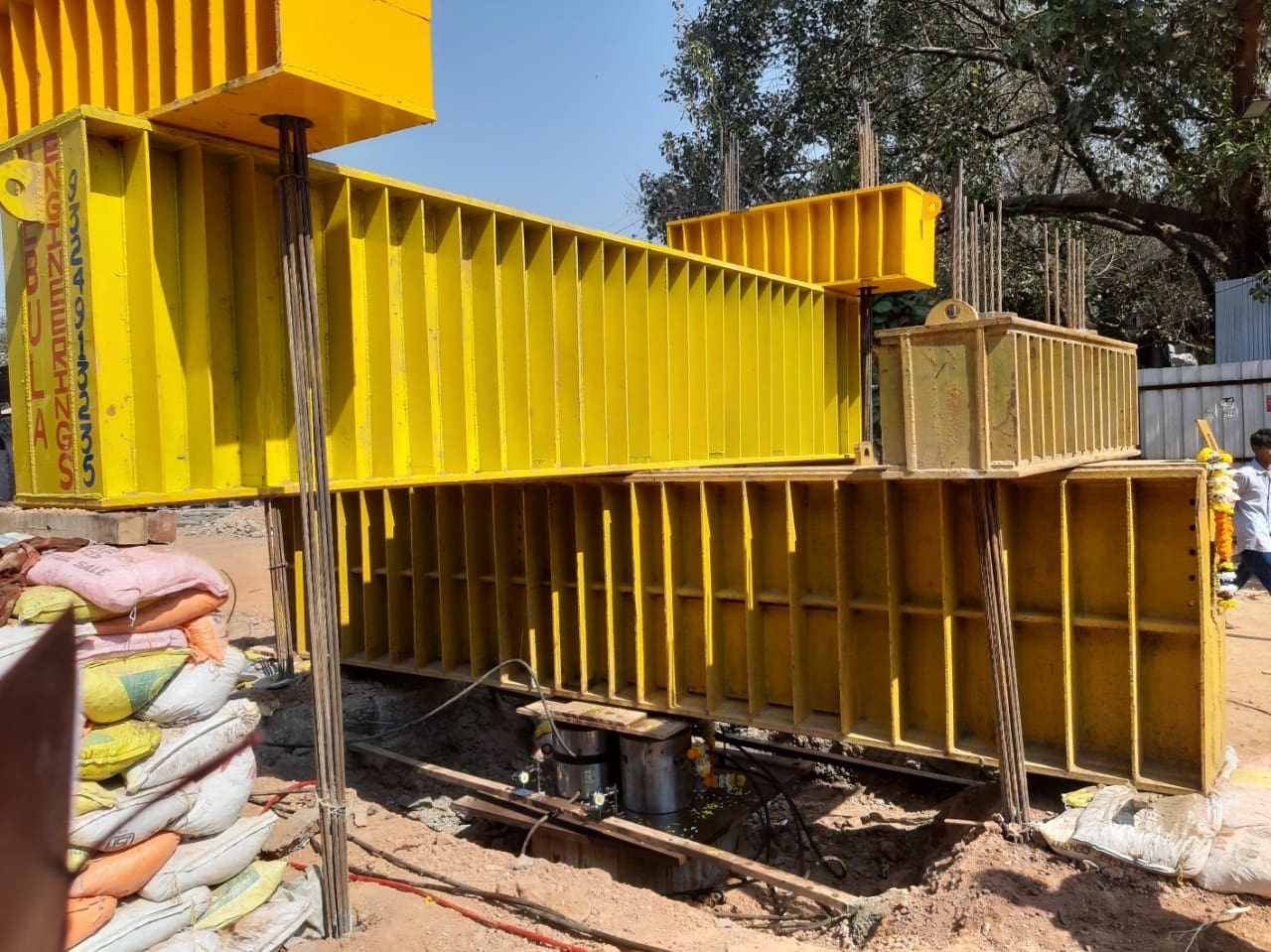
How the Pile Vertical Load Test is Conducted
-
1Test Setup — Kentledge or Anchor PilesReaction system (kentledge dead weight or anchor piles) is set up to provide resistance against the applied load.
-
2Reference Beam & Instrument InstallationReference beams are erected independently. Dial gauges or LVDTs are fixed to measure pile head settlement.
-
3Hydraulic Jack & Load Cell PlacementCalibrated hydraulic jack and load cell are positioned between pile head and reaction beam/kentledge.
-
4Incremental Load ApplicationLoad is applied in increments (IS 2911: 20% of safe load per stage). Settlement is recorded at each stage after stabilisation.
-
5Load-Settlement Analysis & ReportingLoad-settlement curve is plotted. Failure load, safe load and elastic/plastic settlement are determined. NABL report issued within 7 days.
Applicable Test Standards
| Standard | Title | Scope | Type |
|---|---|---|---|
| IS 2911 Part 4 | Code of Practice for Design and Construction of Pile Foundations — Load Test | Static Load Test | Indian Standard |
| ASTM D1143 | Standard Test Methods for Deep Foundations Under Static Axial Compressive Load | Compression Test | ASTM |
| BS EN ISO 22477-1 | Geotechnical Investigation and Testing — Testing of Geotechnical Structures | Foundation Testing | European Standard |
| ASCE 20-96 | Standard Guidelines for Design and Installation of Pile Foundations | Design Reference | ASCE |