
Carbonation Depth Test
(Phenolphthalein Indicator Test)
Measurement of the depth of carbonation in concrete using phenolphthalein indicator — assessing the rate of CO₂ penetration and remaining alkalinity protecting the reinforcement from corrosion.
What is the Carbonation Depth Test?
The Carbonation Depth Test determines the depth to which concrete has carbonated — losing its alkalinity due to reaction with atmospheric CO₂. Carbonation reduces the concrete pH from ~13 to below 9, destroying the passive oxide film on reinforcing steel and initiating corrosion when the carbonation front reaches the rebar.
Conducted as per BS EN 14630 and IS 13311, the test uses phenolphthalein indicator sprayed on freshly exposed concrete cores or drilled holes. Carbonated zones remain colourless while uncarbonated zones turn pink/purple. Global Lab measures carbonation depth at multiple locations and correlates with rebar cover depth to assess remaining service life.
Carbonation Depth Test — Site Images


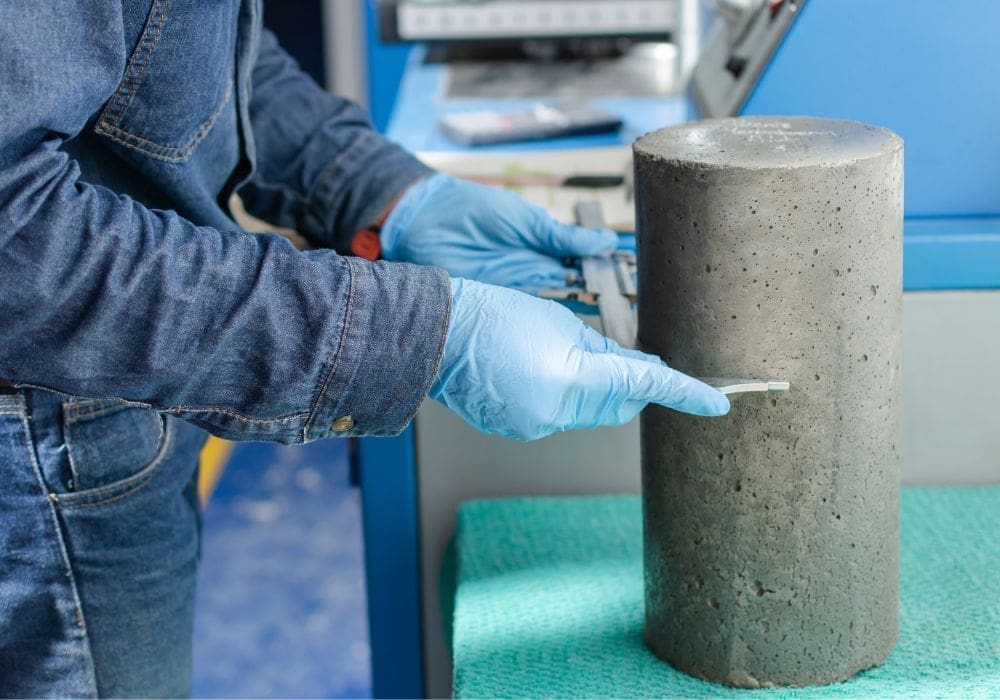
How the Carbonation Depth Test is Conducted
-
1Core Drilling or Hole DrillingA 50mm diameter core is extracted or a hole is drilled to expose fresh concrete at the test location.
-
2Phenolphthalein ApplicationPhenolphthalein indicator solution (1% in ethanol) is immediately sprayed on the freshly exposed concrete surface.
-
3Depth MeasurementAfter 30–60 seconds, the boundary between the colourless carbonated zone and the pink uncarbonated zone is measured with a digital calliper.
-
4Multiple Location TestingProcess is repeated at minimum 5 locations across the structure for representative carbonation mapping.
-
5Service Life Assessment & ReportingCarbonation depth vs rebar cover depth comparison is made. Remaining service life estimated. NABL report issued within 24 hours.
Applicable Test Standards
| Standard | Title | Scope | Type |
|---|---|---|---|
| BS EN 14630 | Products and Systems for the Protection and Repair of Concrete Structures — Determination of Carbonation Depth | Carbonation Test | British Standard |
| RILEM CPC-18 | Measurement of Hardened Concrete Carbonation Depth | Carbonation | RILEM |
| IS 13311 | Non-Destructive Testing of Concrete — Recommendations | General NDT | Indian Standard |
| fib Bulletin 34 | Model Code for Service Life Design | Service Life | fib |