
Masonry Mortar Joint Shear Strength Index Test
(In-Situ Shear Strength — ASTM C1531)
In-situ measurement of masonry mortar bed joint shear strength — providing actual shear resistance data for structural and seismic assessment of existing unreinforced masonry walls.
What is the Masonry Mortar Joint Shear Strength Index Test?
The Masonry Mortar Joint Shear Strength Index Test removes mortar from adjacent vertical joints, then applies a horizontal shear force to slide a single brick along its bed joint. The test provides initial shear strength (cohesion) data critical for IS 1893 seismic assessment of unreinforced masonry.
Conducted as per ASTM C1531, this test is essential for seismic vulnerability assessment of URM buildings, heritage building structural assessment and post-earthquake safety evaluation. The measured shear strength is used directly in masonry shear capacity calculations per IS 1905 and IS 1893.
Masonry Mortar Joint Shear Strength Index Test — Site Images
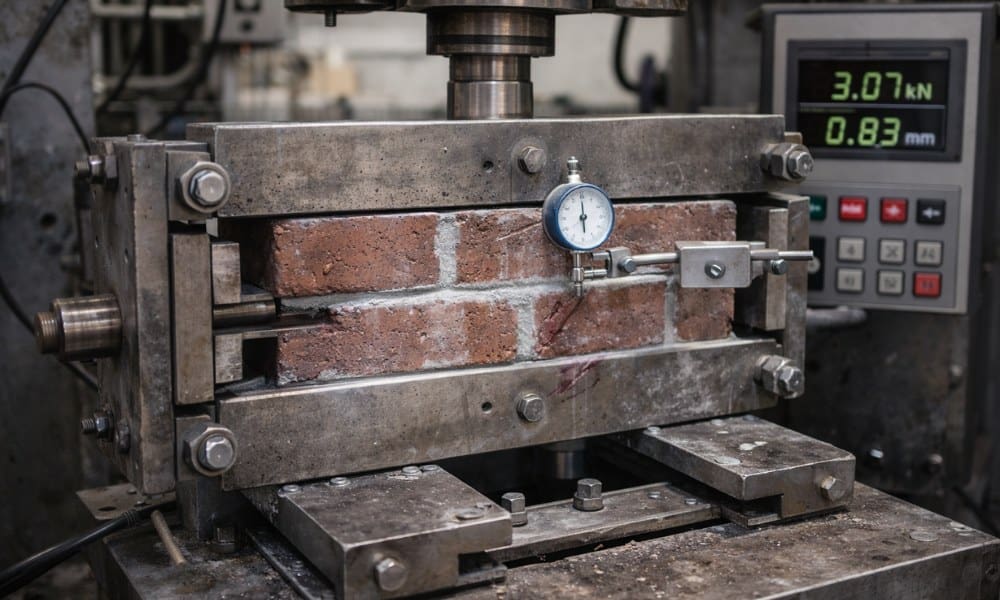
How the Masonry Mortar Joint Shear Strength Index Test is Conducted
-
1Brick SelectionA brick unit in a representative location is selected. Adjacent vertical joint mortar removed carefully.
-
2Loading Plate PlacementSteel loading plate and hydraulic jack positioned to apply horizontal shear load.
-
3Normal Load MeasurementExisting vertical compressive stress on test brick measured or calculated.
-
4Shear Load ApplicationHorizontal load applied at constant rate until brick slides along bed joint.
-
5Shear Strength CalculationShear strength = peak shear force / brick face area. Cohesion c₀ determined. NABL report within 48 hours.
Applicable Test Standards
| Standard | Title | Scope | Type |
|---|---|---|---|
| ASTM C1531 | Standard Test Methods for In Situ Measurement of Masonry Mortar Joint Shear Strength Index | Shear Test | ASTM |
| IS 1905 | Code of Practice for Structural Use of Unreinforced Masonry | Masonry Design | Indian Standard |
| IS 1893 | Criteria for Earthquake Resistant Design of Structures | Seismic Assessment | Indian Standard |
| ASCE 41 | Seismic Evaluation and Retrofit of Existing Buildings | Seismic Retrofit | ASCE |