
Anchor Pull Out Test
(Anchor Tensile Capacity Test)
In-situ tensile load test on installed anchors, bolts and fasteners to verify their pull-out capacity in concrete — essential for façade, cladding, curtain wall and structural anchorage acceptance testing.
What is the Anchor Pull Out Test?
The Anchor Pull Out Test applies a direct tensile load to installed anchors (chemical anchors, mechanical expansion anchors, cast-in bolts) to verify they achieve the specified characteristic resistance. The test confirms that the anchor installation — drilling diameter, depth, cleanliness, adhesive curing and torque — meets design requirements.
Conducted as per ASTM E488 and IS 456, anchor pull-out tests are mandatory for façade and cladding anchors, safety-critical fixings, post-installed rebar connections and structural steel base plate anchors. Global Lab uses calibrated hydraulic pull-out testers for proof load and ultimate load tests.
Anchor Pull Out Test — Site Images
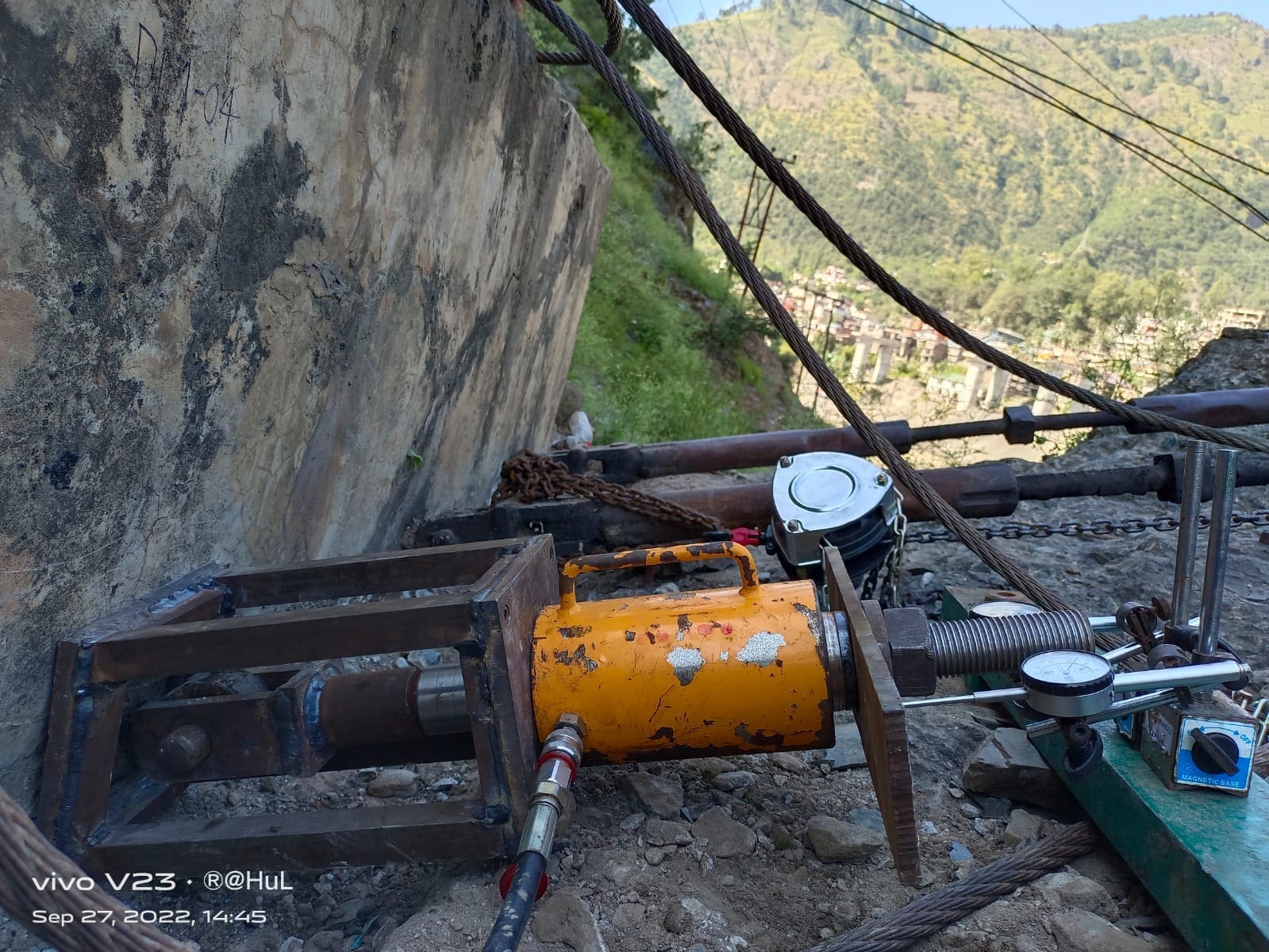
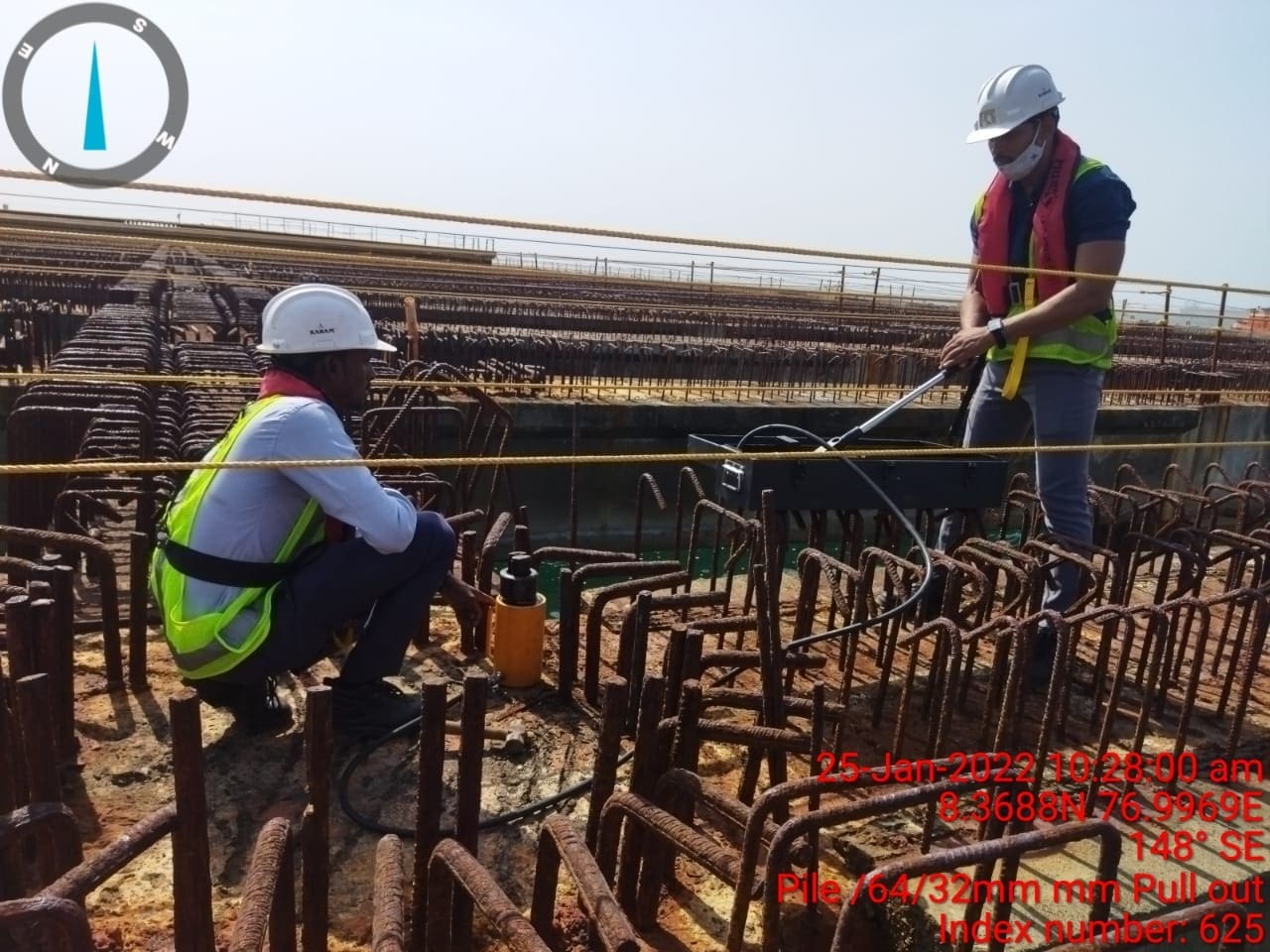
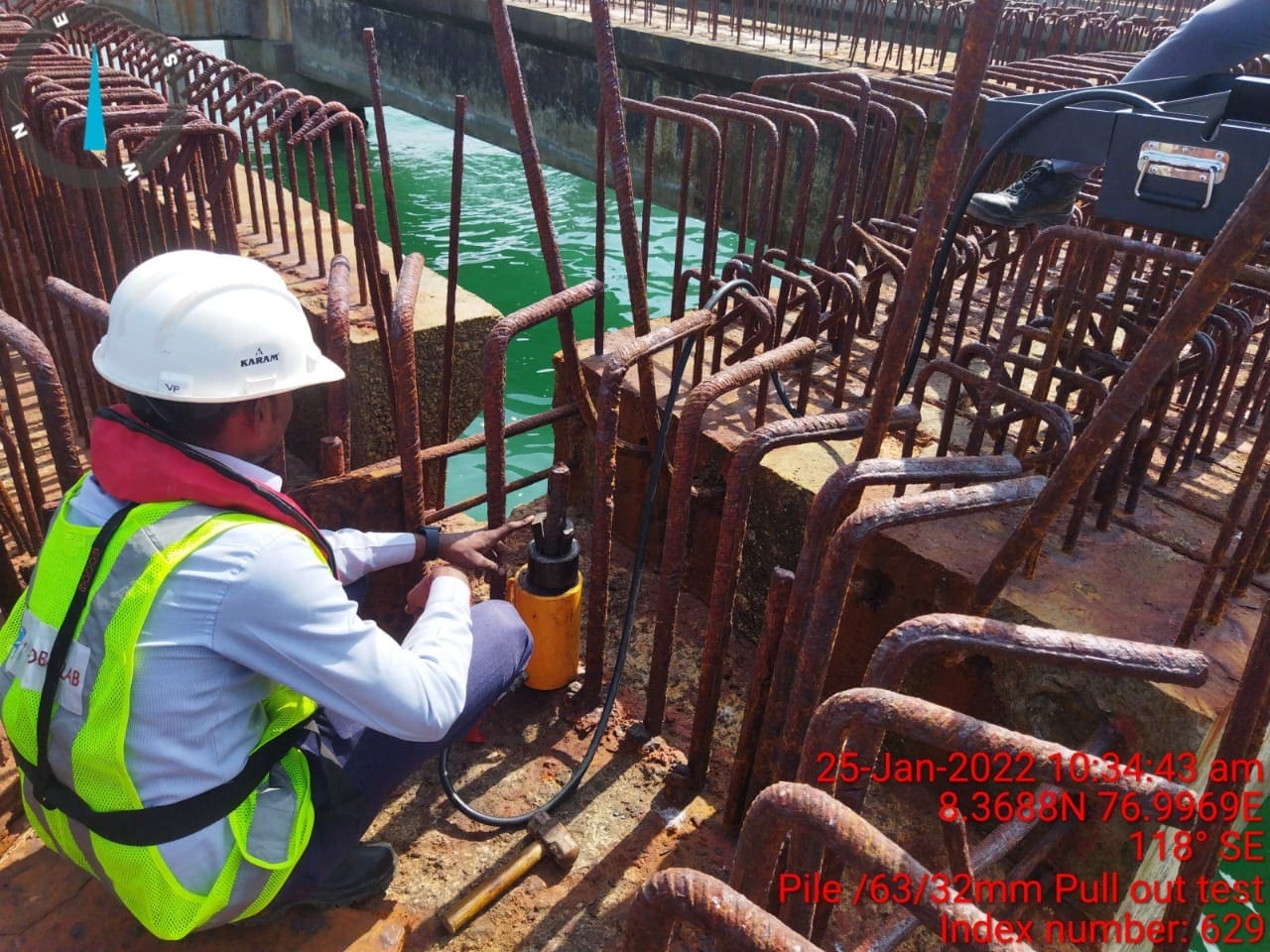
How the Anchor Pull Out Test is Conducted
-
1Anchor SelectionTest anchors are selected per project specification — typically 1% of installed anchors or minimum 5 per anchor type.
-
2Pull-Out Head AttachmentA threaded coupling or gripping head is attached to the anchor rod or bolt.
-
3Reaction Frame PositioningThe hydraulic pull-out tester reaction frame is positioned over the anchor with standoff distance per ASTM E488.
-
4Load ApplicationTensile load is applied at a controlled rate using the hydraulic pump. Load is displayed on the digital gauge.
-
5Result Recording & ReportingMaximum load achieved, failure mode (anchor pull-out, concrete cone, rebar/anchor failure) and pass/fail status recorded. NABL report within 24 hours.
Applicable Test Standards
| Standard | Title | Scope | Type |
|---|---|---|---|
| ASTM E488 | Standard Test Methods for Strength of Anchors in Concrete Elements | Anchor Pull-Out | ASTM |
| IS 456:2000 | Plain and Reinforced Concrete — Code of Practice | Anchorage | Indian Standard |
| ETAG 001 | Guideline for European Technical Approval of Metal Anchors | European Anchor Standard | ETAG |
| ACI 318 Appendix D | Anchoring to Concrete — Strength Design | Anchor Design | ACI |