
Autogenous Strain of Cement Paste and Mortar
(Chemical Shrinkage — ASTM C1698)
Measurement of autogenous (self-desiccation) shrinkage of cement paste and mortar from initial set — critical for high-performance and low water-cement ratio concrete prone to early-age cracking.
What is the Autogenous Strain of Cement Paste and Mortar?
Autogenous Shrinkage is the volumetric change of cement paste after setting due to chemical shrinkage consuming water from capillary pores — causing self-desiccation. In HPC with low W/CM ratios (<0.40), autogenous shrinkage can be significant (200–400 microstrain) and is a primary cause of early-age cracking.
Conducted as per ASTM C1698, autogenous strain measurement uses sealed corrugated plastic tubes preventing any moisture exchange — providing pure autogenous measurement from initial set through 28 days. Essential data for HPC, UHPC and mass concrete mix design with cracking risk.
Autogenous Strain of Cement Paste and Mortar — Site Images
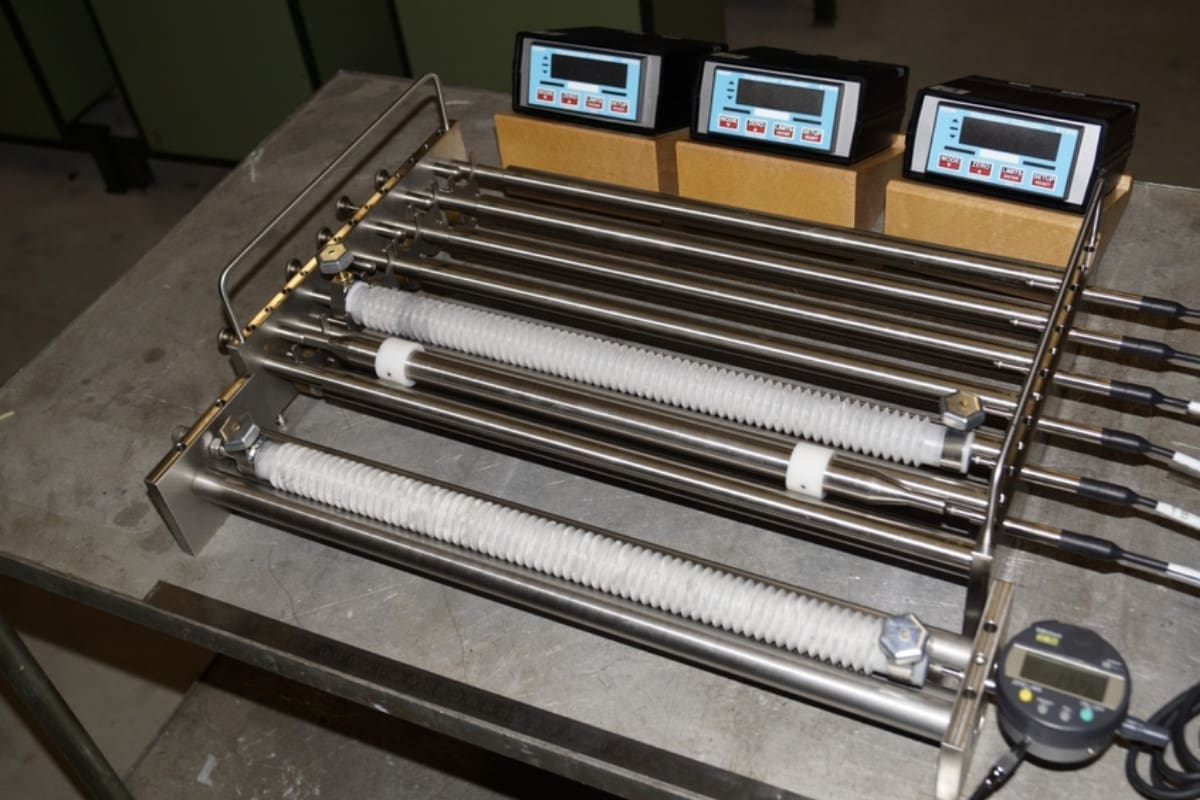
How the Autogenous Strain of Cement Paste and Mortar is Conducted
-
1Paste/Mortar PreparationCement paste or mortar mixed at target W/CM ratio. Placed in corrugated plastic tubes immediately.
-
2Initial Set DetectionSetting time determined using Vicat penetration test per IS 4031.
-
3Zero ReferenceLength measurement recorded at initial set — zero datum for autogenous strain.
-
4Sealed Curing & MeasurementSealed tubes stored at 23°C. Length change measured daily for 7 days then at 14 and 28 days using digital dilatometer.
-
5Autogenous Strain ReportStrain vs time curve plotted. 28-day autogenous strain in μm/m reported. NABL report within 28 days.
Applicable Test Standards
| Standard | Title | Scope | Type |
|---|---|---|---|
| ASTM C1698 | Standard Test Method for Autogenous Strain of Cement Paste and Mortar | Autogenous Shrinkage | ASTM |
| RILEM TC 181 | Early Age Cracking in Cementitious Systems | Early Age Cracking | RILEM |
| ACI 231R | Report on Early-Age Cracking: Causes, Measurement, and Mitigation | Cracking Report | ACI |
| IS 516 | Methods of Tests for Strength of Concrete | Concrete Testing Reference | Indian Standard |