
Field Dry Density Test
(Sand Replacement Method)
In-situ measurement of the dry density and degree of compaction of compacted soil fills, embankments and sub-grades using the sand replacement method — verifying that specified compaction levels are achieved.
What is the Field Dry Density Test?
The Field Dry Density Test (Sand Replacement Method) measures the in-situ dry density of compacted soil by excavating a small hole in the compacted layer, measuring its volume using calibrated sand, and determining the dry weight of the excavated soil. The degree of compaction is then calculated by comparing the measured density against the Maximum Dry Density (MDD) from the Proctor test.
Conducted as per IS 2720 Part 28, field density testing is mandatory for every compacted layer in road construction, embankments, backfill and ground improvement. Global Lab conducts field density tests using calibrated sand pouring cylinders with concurrent MDD determination from the site laboratory for accurate compaction percentage calculation.
Field Dry Density Test — Site Images
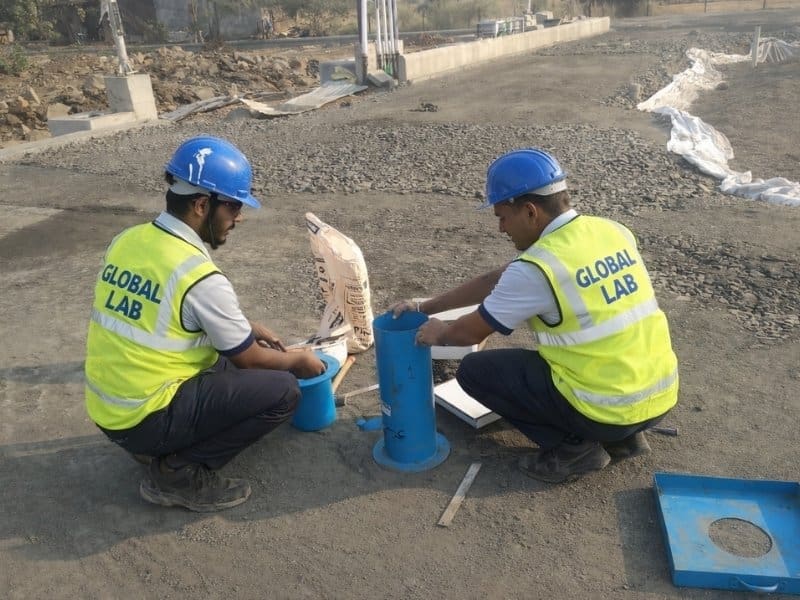
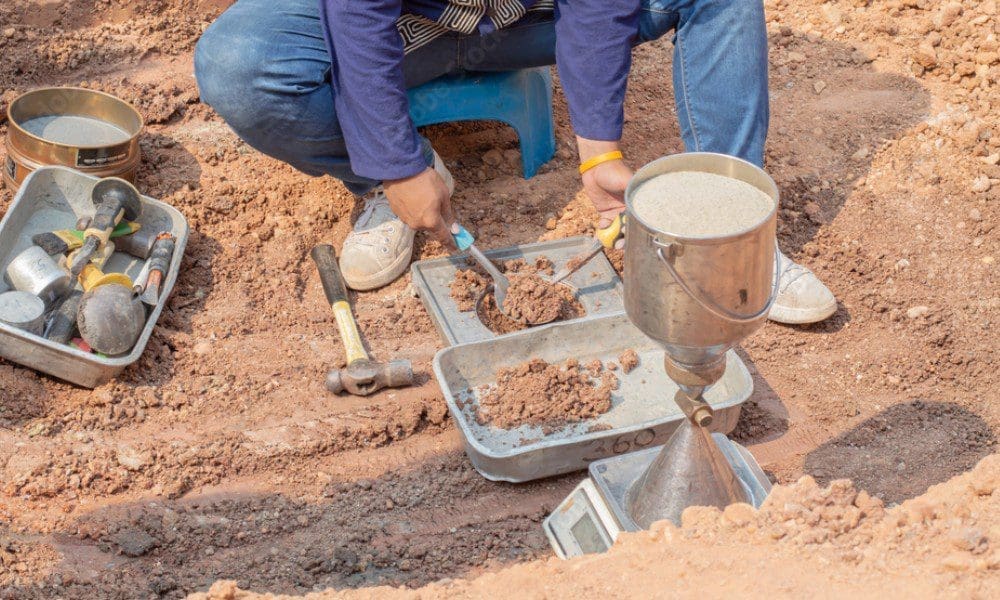
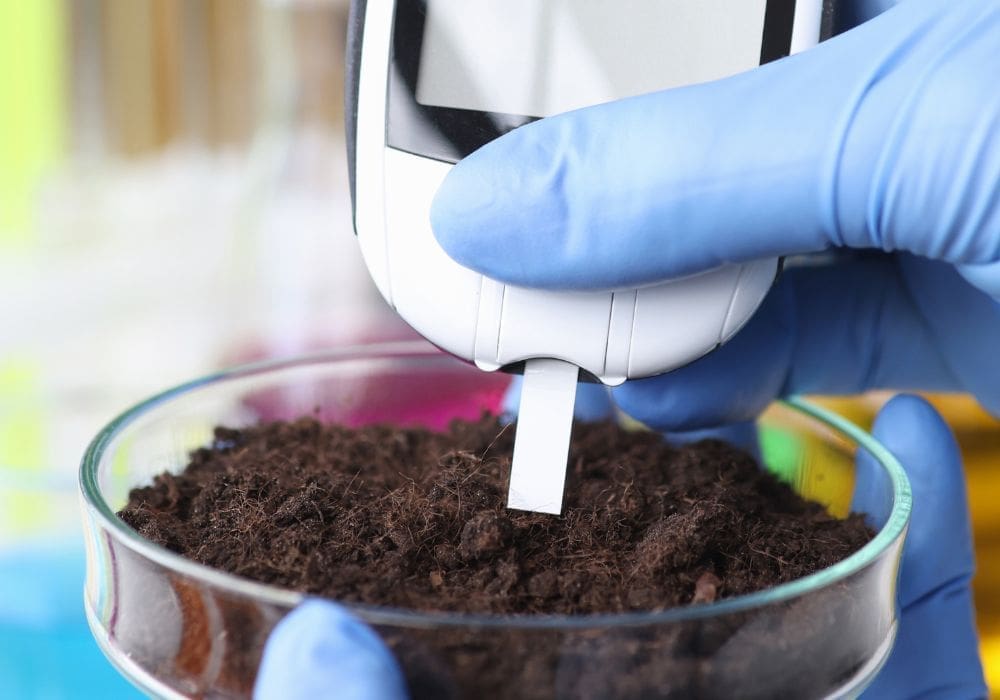
How the Field Dry Density Test is Conducted
-
1Surface PreparationCompacted soil surface is trimmed flat and cleared of loose material at the test location.
-
2Hole ExcavationA test hole of 100mm diameter and full layer thickness is carefully excavated. All excavated soil is collected and weighed.
-
3Volume Measurement by SandCalibrated Ottawa sand is poured into the hole using the sand pouring cylinder. Volume of hole calculated from weight of sand used and its density.
-
4Moisture Content DeterminationA sample of excavated soil is tested for moisture content in the field laboratory.
-
5Dry Density & Compaction CalculationBulk density = soil weight / hole volume. Dry density = bulk density / (1 + moisture content/100). Compaction % = FDD/MDD × 100. NABL report within 24 hours.
Applicable Test Standards
| Standard | Title | Scope | Type |
|---|---|---|---|
| IS 2720 Part 28 | Methods of Test for Soils — Determination of Dry Density by Sand Replacement Method | Field Density | Indian Standard |
| IS 2720 Part 7 | Methods of Test for Soils — Determination of Water Content-Dry Density Relation (Light Compaction) | Proctor Test | Indian Standard |
| ASTM D1556 | Standard Test Method for Density and Unit Weight of Soil in Place by Sand Cone Method | Field Density | ASTM |
| IRC 36 | Recommended Practice for Construction of Earth Embankments for Road Works | Compaction Spec | IRC |