
Water Permeability Test
(Depth of Water Penetration)
Measurement of the depth of water penetration under pressure in hardened concrete — a key durability indicator for waterproof concrete structures, basements, water-retaining structures and marine applications.
What is the Water Permeability Test?
The Water Permeability Test (Depth of Water Penetration under Pressure) subjects a hardened concrete specimen to water pressure of 500 kPa for 72 hours. The specimen is then split and the maximum depth of water penetration is measured. This directly indicates the concrete's impermeability — a critical durability parameter.
Conducted as per BS EN 12390-8 and DIN 1048, this test is specified for basement concrete (P-grade mixes), water-retaining structures, tunnels, swimming pools, dam faces and marine structures. Global Lab's NABL-accredited laboratory maintains calibrated water permeability test cells with automated pressure control.
Water Permeability Test — Site Images

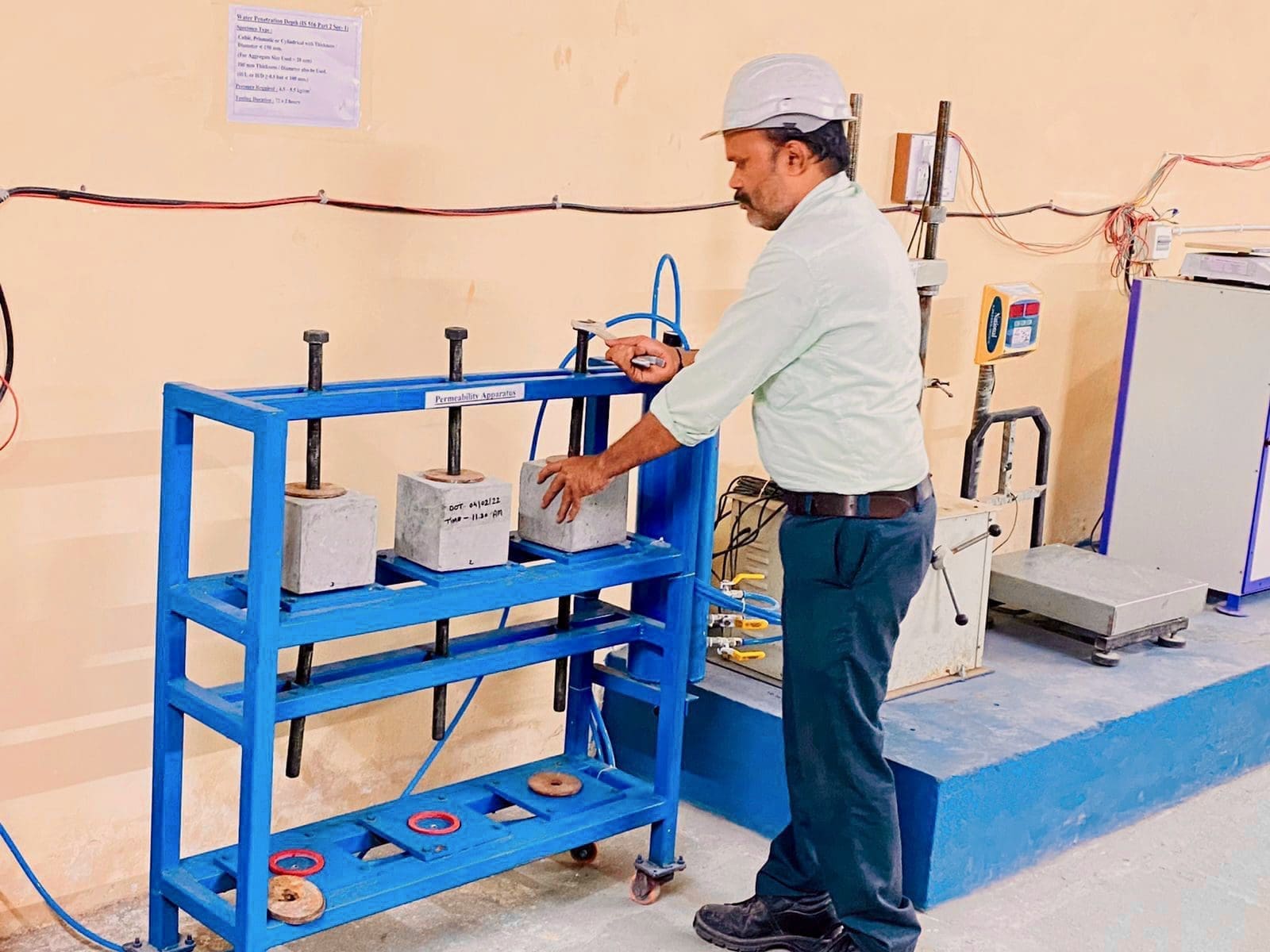
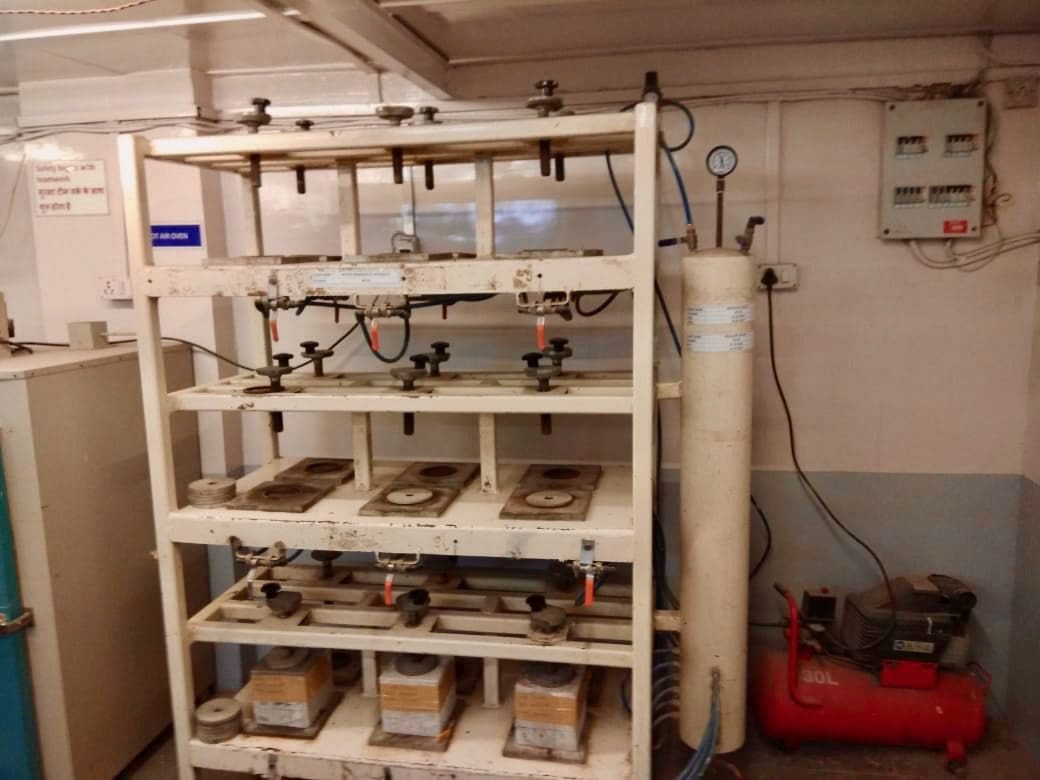
How the Water Permeability Test is Conducted
-
1Specimen Preparation150mm cube or cylinder specimens are cured for 28 days. Exposed faces are cleaned and sealed with epoxy on 5 faces.
-
2Cell AssemblyPrepared specimen is mounted in the permeability cell. Water connection is made to the exposed face.
-
3Pressure Application500 kPa (5 bar) water pressure is applied to the specimen face for exactly 72 hours per BS EN 12390-8.
-
4Specimen SplittingAfter 72 hours, the specimen is removed and split along its central axis perpendicular to the water face.
-
5Penetration Depth MeasurementMaximum depth of water penetration is measured on the split face using a steel rule. Average of 3 measurements recorded. NABL report within 14 days.
Applicable Test Standards
| Standard | Title | Scope | Type |
|---|---|---|---|
| BS EN 12390-8 | Testing Hardened Concrete — Depth of Penetration of Water under Pressure | Water Permeability | British Standard |
| DIN 1048 Part 5 | Testing Concrete — Testing of Hardened Concrete | Permeability | German Standard |
| IS 3085 | Methods of Test for Permeability of Cement Mortar and Concrete | Permeability | Indian Standard |
| IS 3370 | Code of Practice for Concrete Structures for Storage of Liquids | Water Retaining | Indian Standard |