
PQC Concrete Mix Design
(Pavement Quality Concrete)
Pavement Quality Concrete mix design as per IRC 44 for rigid pavement construction — achieving specified flexural strength, durability and workability for highway, airport and industrial floor slabs.
What is the PQC Concrete Mix Design?
Pavement Quality Concrete (PQC) is a high-quality, low-slump concrete used in rigid pavement construction — highways, airport runways, industrial floors and toll plazas. PQC mix design focuses primarily on achieving minimum flexural strength (modulus of rupture) rather than compressive strength, along with low water-cement ratio for durability.
Conducted as per IRC 44 and IRC 58, PQC mix designs specify flexural strength targets of 4.5 MPa (MR 4.5) or higher at 28 days. Global Lab designs PQC mixes using actual project aggregates and cement, validates through trial mixes with flexural beam testing, and issues NABL-accredited mix design reports accepted by NHAI and state highway authorities.
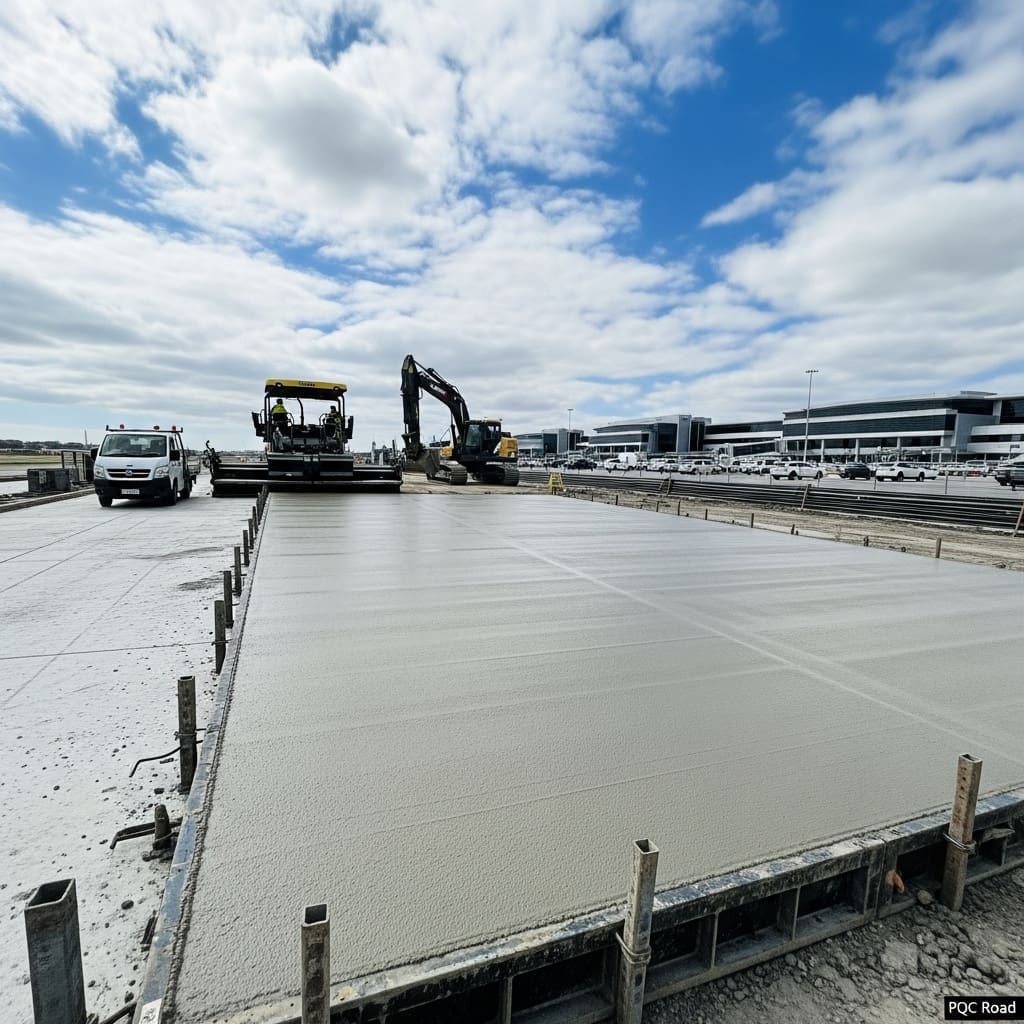
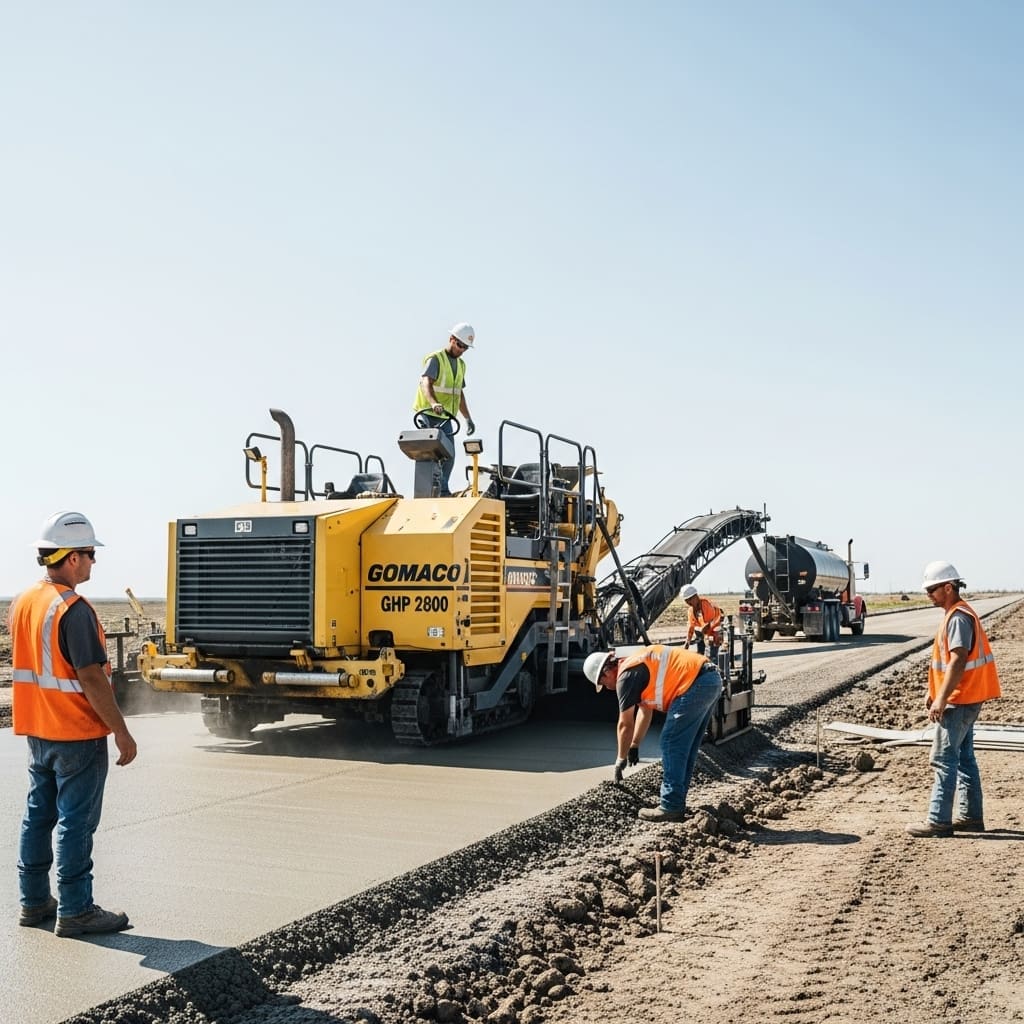
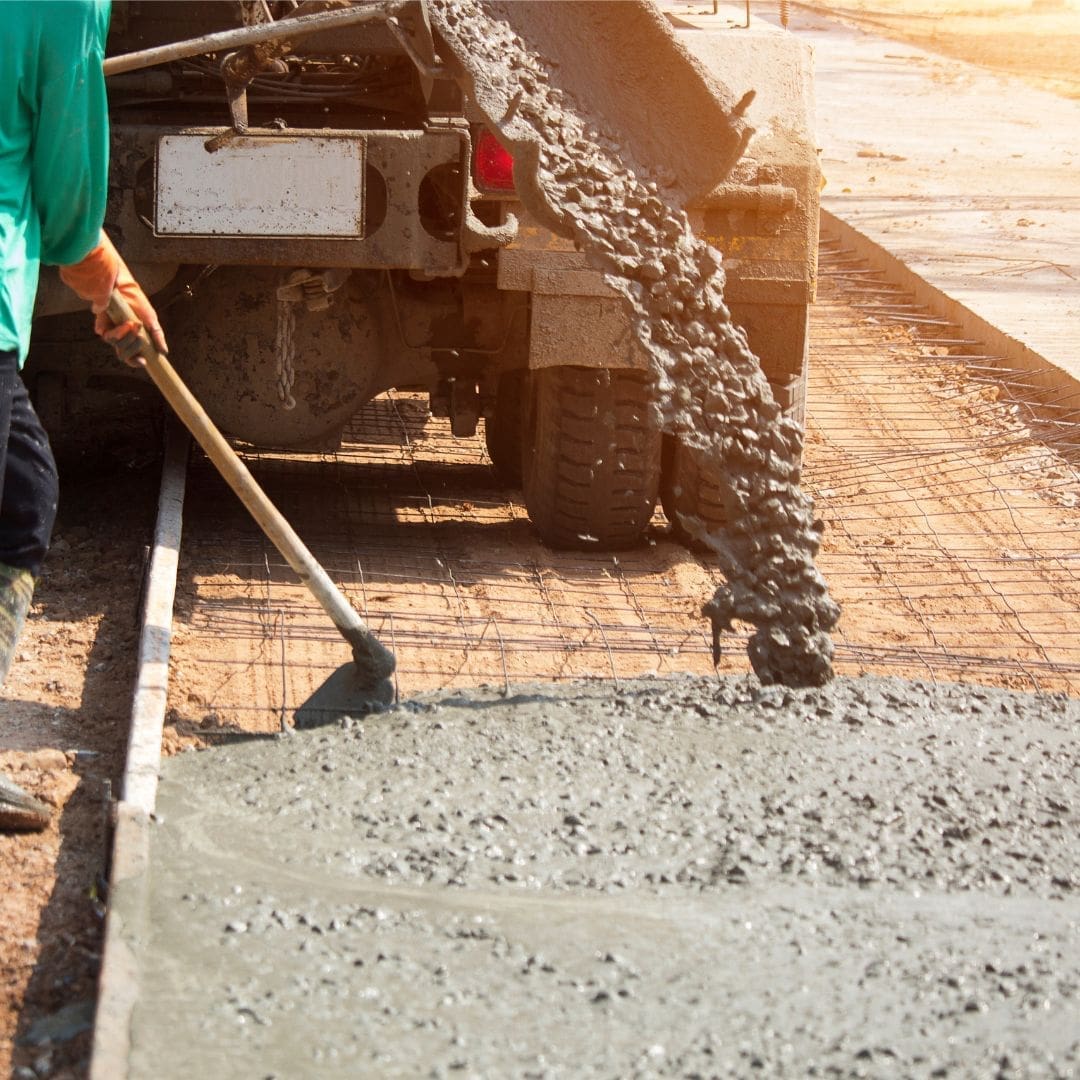
PQC Concrete Mix Design — Site Images
How the PQC Concrete Mix Design is Conducted
-
1Material TestingCement (OPC 43 or 53), coarse aggregate (max 31.5mm), fine aggregate and water tested per IS 383 and IS 4031.
-
2Target Flexural StrengthTarget mean flexural strength calculated from specified characteristic strength + margin per IRC 44.
-
3Mix ProportioningW/C ratio, cement content, aggregate proportions and workability aids calculated per IRC 44 method.
-
4Trial Mix — Fresh & HardenedFresh properties (slump 25–75mm), air content, density. Flexural beams and cubes cast — tested at 7 and 28 days.
-
5IRC 44 Mix Design ReportFlexural and compressive strength results vs IRC 44 requirements. NABL report with JMF (Job Mix Formula) issued.
Applicable Test Standards
| Standard | Title | Scope | Type |
|---|---|---|---|
| IRC 44 | Guidelines for Cement Concrete Mix Design for Pavements | PQC Mix Design | IRC |
| IRC 58 | Guidelines for the Design of Plain Jointed Rigid Pavements for Highways | Rigid Pavement | IRC |
| MORTH | Specifications for Road and Bridge Works (5th Revision) | Highway Spec | MORTH |
| IS 516 | Methods of Tests for Strength of Concrete | Strength Testing | Indian Standard |