
Pull-Off Adhesion Strength Test of Gypsum
(Gypsum Plaster Bond Strength)
In-situ measurement of the adhesion bond strength of gypsum plaster to concrete or masonry substrates — verifying application quality, substrate preparation and gypsum product performance.
What is the Pull-Off Adhesion Strength Test of Gypsum?
The Pull-Off Adhesion Strength Test of Gypsum measures the tensile bond between a gypsum plaster finish and its substrate using a hydraulic pull-off tester. A 50mm steel dolly is bonded to the gypsum surface, core-drilled around and pulled off to determine the adhesion strength and failure mode.
Conducted as per BS EN 13279 and IS 2095, this test is essential for premium interior gypsum finishes, false ceiling gypsum board adhesion, hospital and clean room gypsum wall applications and any specification requiring minimum bond strength. Global Lab uses NABL-calibrated pull-off testers for accurate bond strength measurement.
Pull-Off Adhesion Strength Test of Gypsum — Site Images
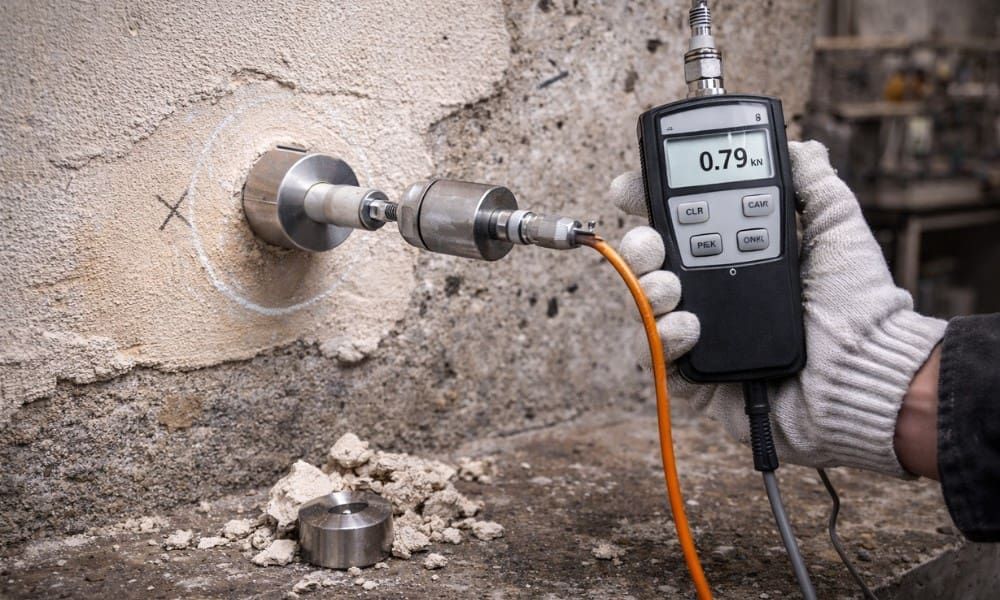
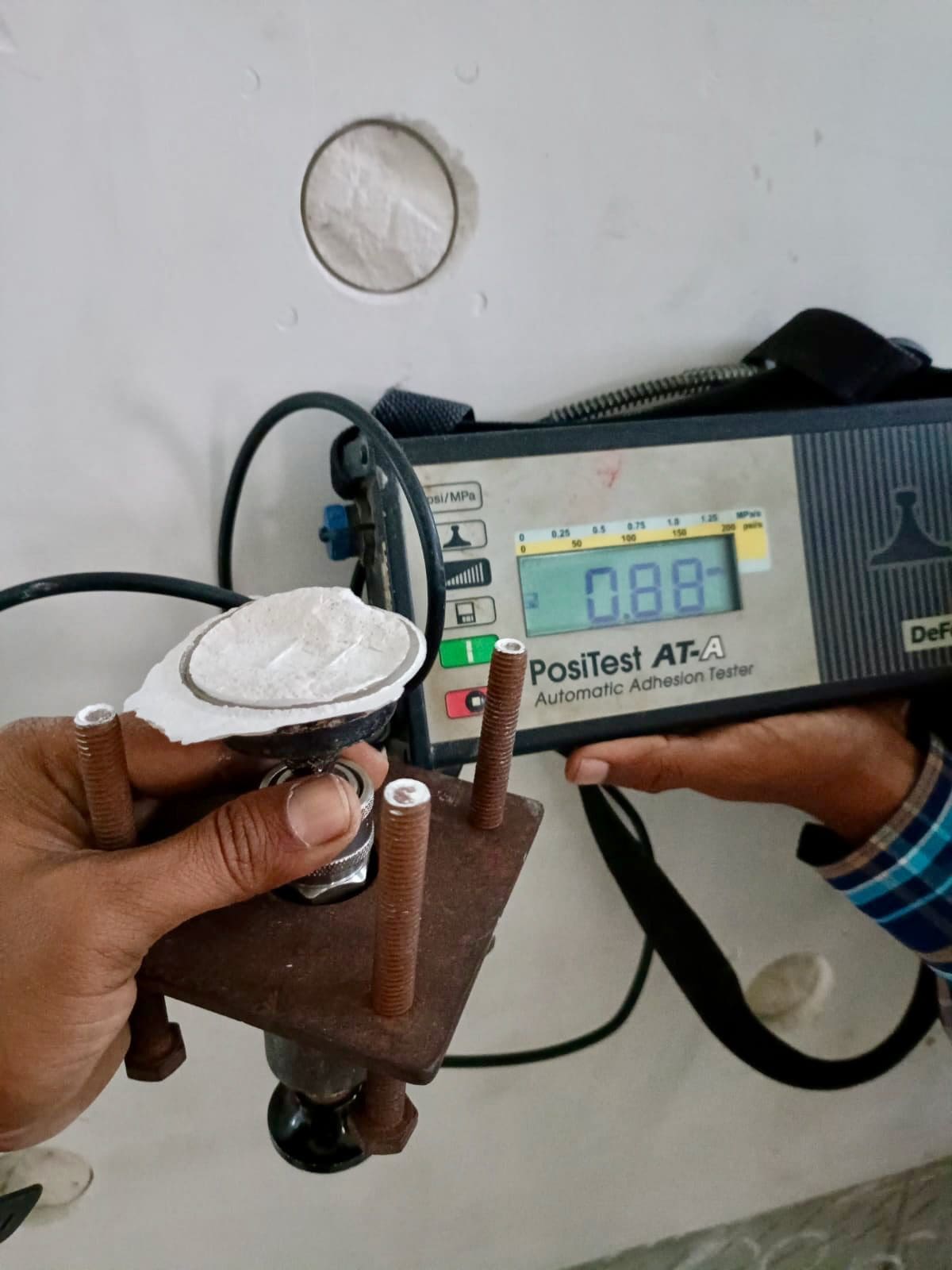
How the Pull-Off Adhesion Strength Test of Gypsum is Conducted
-
1Dolly Bonding50mm steel dolly bonded to gypsum surface with two-part epoxy. Cured for minimum 24 hours.
-
2Core Drilling50mm diamond core drill cuts through gypsum layer around the dolly to isolate test area.
-
3Pull-Off Tester SetupCalibrated hydraulic pull-off tester coupled to dolly via loading rod.
-
4Controlled Load ApplicationTensile load applied at 0.05 N/mm²/s per BS EN 13279 until failure occurs.
-
5Result RecordingMaximum load, bond strength (N/mm²) and failure mode recorded. NABL report issued within 24 hours.
Applicable Test Standards
| Standard | Title | Scope | Type |
|---|---|---|---|
| BS EN 13279 | Gypsum Binders and Gypsum Plasters — Test Methods | Gypsum Testing | British Standard |
| IS 2095 | Gypsum Plaster Boards — Specification | Gypsum Board | Indian Standard |
| ASTM D4541 | Standard Test Method for Pull-Off Strength of Coatings | Pull-Off Test | ASTM |
| BS EN 1542 | Measurement of Bond Strength by Pull-Off | Bond Strength | British Standard |