Skip links

Pile Lateral Load Test.

Our Services

Evaluating Pile Performance Under Horizontal Forces for Safer Foundations

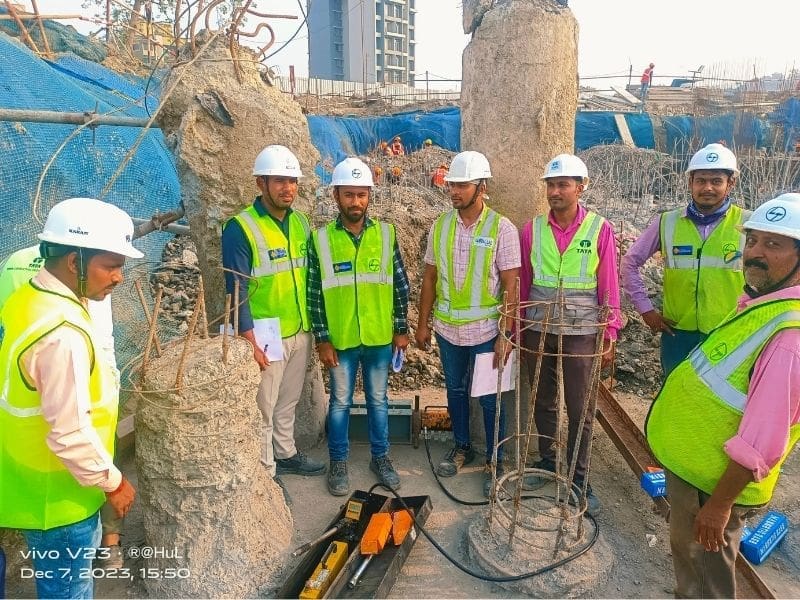
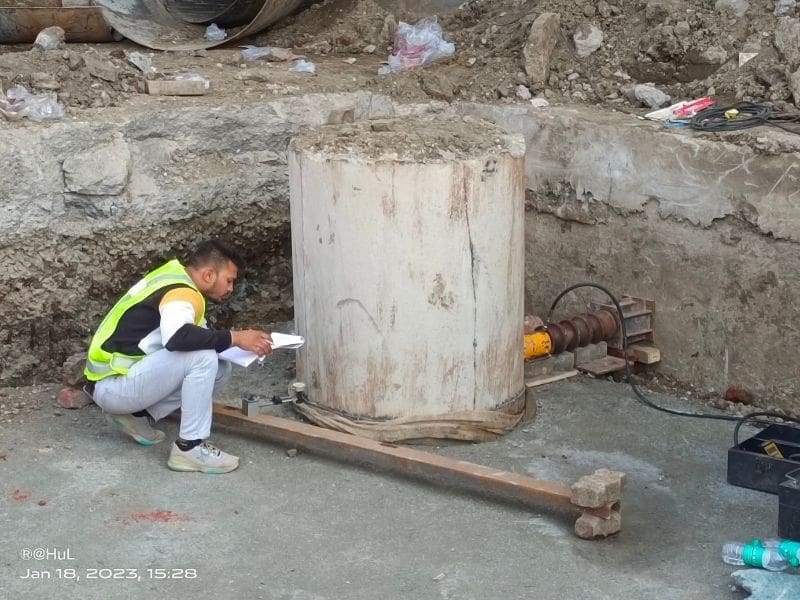
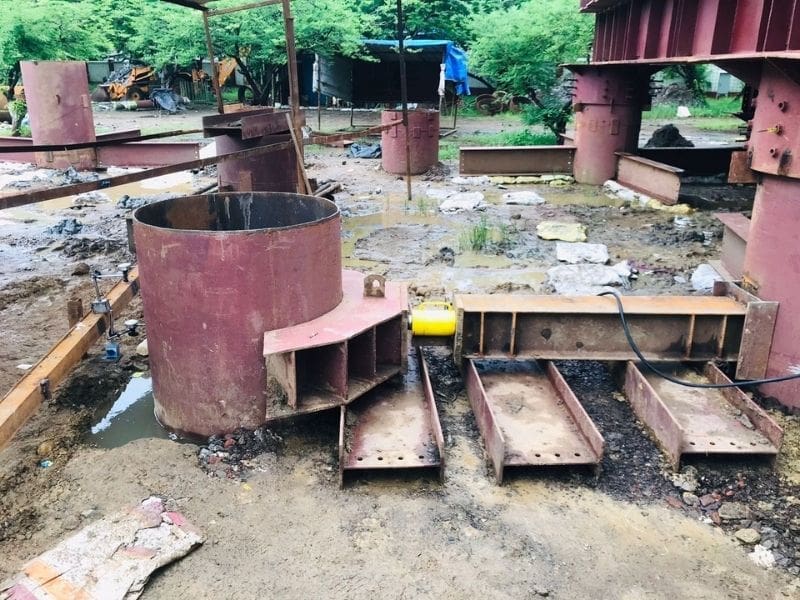
Pile Lateral Load Test is a vital in-situ field test in geotechnical and structural engineering, designed to evaluate how deep foundations perform under horizontal or lateral loads. Unlike vertical load tests, which assess the pile’s bearing capacity, the lateral load test focuses on the pile’s resistance to horizontal forces, load–deflection behavior, and overall stability — ensuring that the foundation can safely withstand the environmental and operational forces acting on it. At Global Lab, we conduct Lateral Load Tests as per IS 2911 (Part 4) and ASTM D3966, utilizing precision hydraulic systems and electronic measurement devices. Our NABL-accredited team delivers accurate, real-world data for design validation, safety assessment, and optimization of deep foundation systems across bridges, towers, ports, and industrial structures.

Why PLLTMatters.

Verifying Design Assumptions

Theoretical models of lateral soil–pile interaction can be highly complex and vary with soil conditions. The lateral load test provides in-situ validation of these assumptions, confirming that the actual pile performance matches the design predictions for load-deflection behavior and capacity.

Ensuring Structural Safety and Longevity

By confirming that the foundation can handle anticipated lateral loads, the test minimizes risks of structural tilting, excessive movement, or collapse. It’s an essential verification step for bridges, high-rise towers, ports, and marine infrastructure where lateral stability is critical.

Determining Load–Deflection Behavior

The load-deflection curve is the core outcome of this test. It helps engineers determine the lateral stiffness, elastic limit, and ultimate capacity of the pile. This data is crucial for designing foundations that limit lateral movement and prevent serviceability or stability issues.

Optimizing Foundation Design

The test results help optimize pile design for cost and efficiency: If piles demonstrate higher-than-expected capacity, smaller sections or fewer piles may be used. If the capacity is lower, the design can be reinforced or modified for safety. This process ensures both performance assurance and material optimisation.

NDT TESTING

GL Advantages.

Accredited Facility: NABL-accredited laboratory with traceable calibration and stringent Quality System procedures.

Compliance with Standards: Tests conducted in accordance with relevant IS/ASTM/RILEM/EN standards.

Experienced Personnel: Technologists and experts who interpret results and recommend mitigation strategies.

Rapid and Reliable Reporting: Valid reports that comply with relevant standards.

Testing Capabilities: Lab and on-site testing, along with post-test consulting services.

Global Lab Advantage.

Accredited facility.
Standards compliance.
Experienced analysts.
Fast, reliable reporting.
Field + Lab capability.


Applications

Bridge abutments, piers, and retaining walls.
Transmission towers and tall industrial chimneys.
Marine and offshore structures (jetties, dolphins, and docks).
High-rise building foundations exposed to strong wind or seismic forces.
Quality control and verification for pile group design in major infrastructure projects.
Pile Lateral Load Test

Know More about GL

  • Key Aspects
  • Certifications
  • FAQS

NABL Accredited

🔍

Advanced Lab & Field Testing

Fast Turnaround Reports

📱

Digital Data & Traceability

🚚

On-Site Testing Across India

Global Lab provides comprehensive testing for construction and engineering materials, including concrete, cement, steel, aggregates, bitumen, soil, tiles, paver blocks, and other civil and infrastructure materials. We also handle customized tests as per client or project specifications.

Yes. Our team is equipped with mobile testing facilities and field instruments for on-site sampling, inspection, and testing — ensuring quick and reliable results without disrupting your project timelines.