Why Material Testing Is the Smartest Investment in Construction Today

In construction, most problems don’t start with dramatic failures. They begin quietly — with a slightly weaker concrete batch, a marginally under-compacted soil layer, or reinforcement steel that doesn’t quite meet its declared strength. Months or years later, those small deviations turn into visible cracks, corrosion, settlement, or structural distress.
The difference between projects that age gracefully and those that demand constant repair often comes down to one discipline: material testing done right, and done early.
For developers, EPC contractors, consultants, architects, and government authorities, material testing is not simply a compliance requirement. It is a strategic tool that protects safety, profitability, and long-term reputation.
The Real Cost of Skipping Proper Testing
Construction margins are tight. Timelines are aggressive. In that pressure, testing can be mistakenly seen as an overhead. In reality, the absence of structured testing is what inflates costs.
Rework in large infrastructure and real estate projects often stems from material non-conformance. When a concrete pour fails to achieve required strength or soil compaction doesn’t meet design density, corrective action becomes expensive and time-consuming. Demolition, re-casting, delay penalties, and reputation damage quickly outweigh the cost of preventive testing.
Early-stage validation — whether it is cement quality, aggregate gradation, reinforcement tensile strength, or soil bearing capacity — costs a fraction of post-failure rectification.
Testing does not slow projects down. It prevents setbacks that stop them altogether.
Safety Begins with Verified Data
Engineering design calculations assume certain material properties. When those assumed properties are inaccurate, structural performance becomes unpredictable.
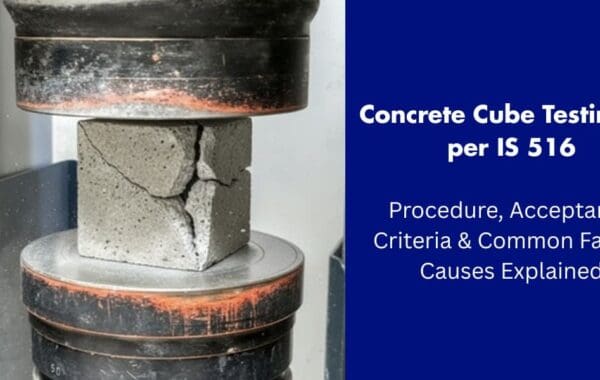
Concrete must meet specified compressive strength and durability parameters. Steel must achieve defined yield strength and elongation to ensure ductility, especially in seismic zones. Soil must be classified and compacted correctly to prevent differential settlement.
These are not theoretical issues. They determine how a building behaves under load, how a bridge withstands vibration, or how a pavement performs under heavy traffic.
Material testing transforms assumptions into measurable proof. It replaces uncertainty with documented reliability.
Sustainability Is More Than a Certification
Sustainable construction is often discussed in terms of green ratings and energy efficiency. But true sustainability begins with durability.
A structure that lasts 60 years with minimal maintenance is inherently more sustainable than one that requires major rehabilitation after 10. Durability testing — such as permeability, chloride penetration, and chemical resistance assessments — plays a direct role in extending service life.
Optimized mix designs also reduce excessive cement use, lowering carbon footprint without compromising strength. When material properties are accurately evaluated, overdesign is minimized and performance is maximized.
In this way, testing becomes both an environmental and economic decision.
Compliance, Documentation, and Risk Management
Modern infrastructure projects involve multiple stakeholders: lenders, regulators, consultants, insurance providers, and investors. Transparent quality documentation strengthens confidence across the entire value chain.
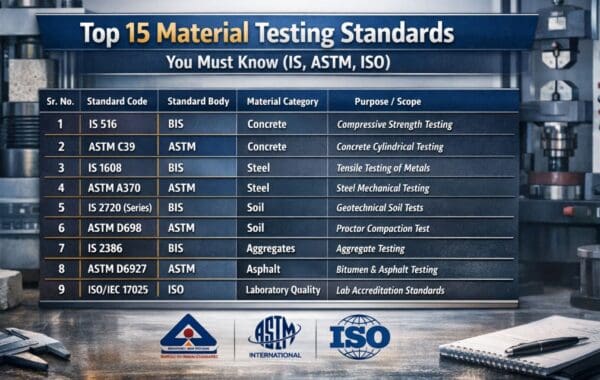
Testing conducted in accordance with recognized standards — whether IS, ASTM, or ISO — provides defensible data in case of audits or contractual disputes. In arbitration scenarios, documented lab reports carry significant weight.
Organizations that invest in structured quality systems reduce legal exposure and strengthen governance credibility.
Why Laboratory Competence Matters
Not all laboratories deliver the same level of technical assurance. Accuracy depends not only on equipment, but also on calibration integrity, method validation, and technical expertise.
Calibration ensures that compression testing machines, weighing balances, thermometers, and pressure gauges deliver accurate readings. Without calibration, even the best procedures can generate misleading results.
This is why leading projects partner only with accredited laboratories that demonstrate technical competence, process traceability, and adherence to international quality frameworks.
Building Stronger Brands Through Quality
Developers and contractors who prioritize material testing signal seriousness about quality. In an increasingly competitive construction landscape, that commitment becomes a differentiator.
Institutional buyers and global investors are more inclined to partner with organizations that can demonstrate structured quality assurance. Trust is built not just through marketing — but through measurable standards and documented processes.
Quality validation strengthens not only structures, but also market positioning.
The Role of a Trusted Testing Partner
When testing is approached holistically — covering material evaluation, non-destructive testing, calibration, and proficiency assessment — it creates a closed loop of quality assurance.
Global Lab Material Testing Services operates with this integrated approach. With NABL-accredited facilities and expertise across concrete, cement, steel, soil, aggregates, and calibration services, the organization supports projects from pre-construction analysis to post-construction validation.
Rather than functioning as a transactional vendor, Global Lab works as a quality partner — aligning testing schedules with project timelines, ensuring compliance with applicable standards, and delivering structured digital reports for transparency and traceability.
For project owners and contractors who recognize that preventive quality control is more economical than reactive correction, engaging a technically competent laboratory early in the process creates measurable value.
Building with Confidence
Infrastructure defines economic growth and community development. Its performance should never rely on assumptions.
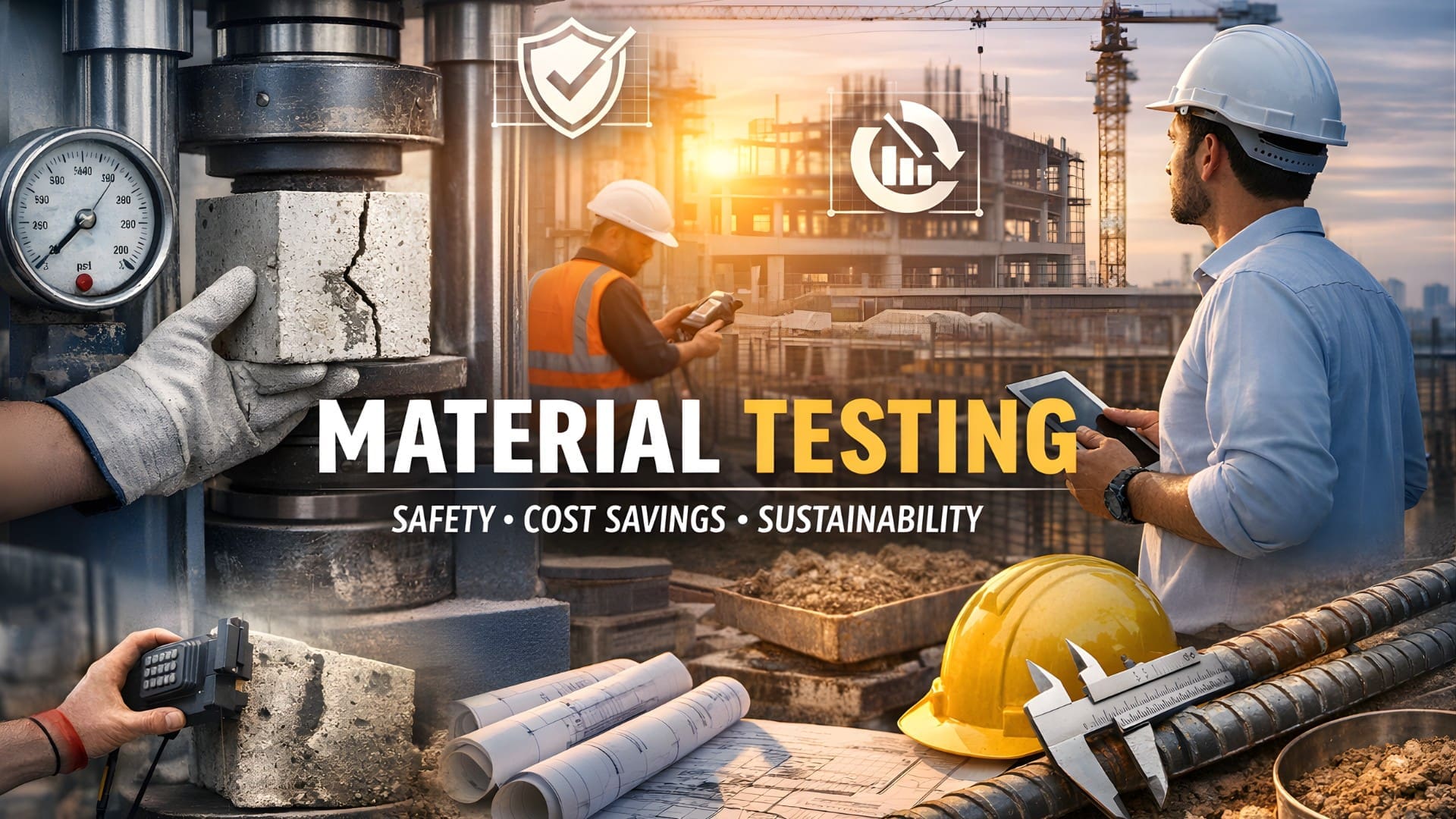
Material testing transforms design intent into verified performance. It reduces risk, lowers lifecycle costs, improves sustainability, and strengthens trust among stakeholders.
When quality is validated, projects stand stronger — not just at completion, but decades later.
For organizations preparing their next development or infrastructure initiative, the question is not whether testing is necessary. The real question is whether it is being executed at the level your project deserves.
Strong structures are built with science, precision, and accountability.
And that begins with the right testing partner.