
Mass Concrete Temperature Monitoring(IS 456 · IS 7861 Part 1 · IS 16700:2017)
Continuous core-to-surface temperature monitoring of mass concrete pours to control heat of hydration, limit thermal-gradient cracking, and verify compliance with the 70°C peak-temperature limit under IS 16700:2017.
What is Mass Concrete Temperature Monitoring?
Mass concrete — large-volume pours such as rafts, pile caps, dams and thick foundations — generates significant heat during cement hydration. If the temperature differential between the hot core and the cooler surface exceeds safe limits, restrained thermal contraction cracks the concrete. IS 456:2000 flags special precautions for mass concrete, and IS 16700:2017 sets a peak internal temperature limit of 70°C along with a maximum core-to-surface differential to keep thermal stresses within safe bounds.
Global Lab instruments the pour with embedded thermocouples or RTD sensors at the core, mid-depth and surface before casting, then logs the full temperature-time history from placement through the peak hydration window (typically 48–96 hours) and the subsequent cool-down. The resulting temperature-time and differential-temperature curves are checked against IS 7861 (Part 1):1975 hot-weather concreting guidance and the IS 16700:2017 limit, flagging any need for cooling measures (ice, chilled water, pipe cooling, insulation) before the differential becomes critical.
Mass Concrete Temperature Monitoring — Site Images
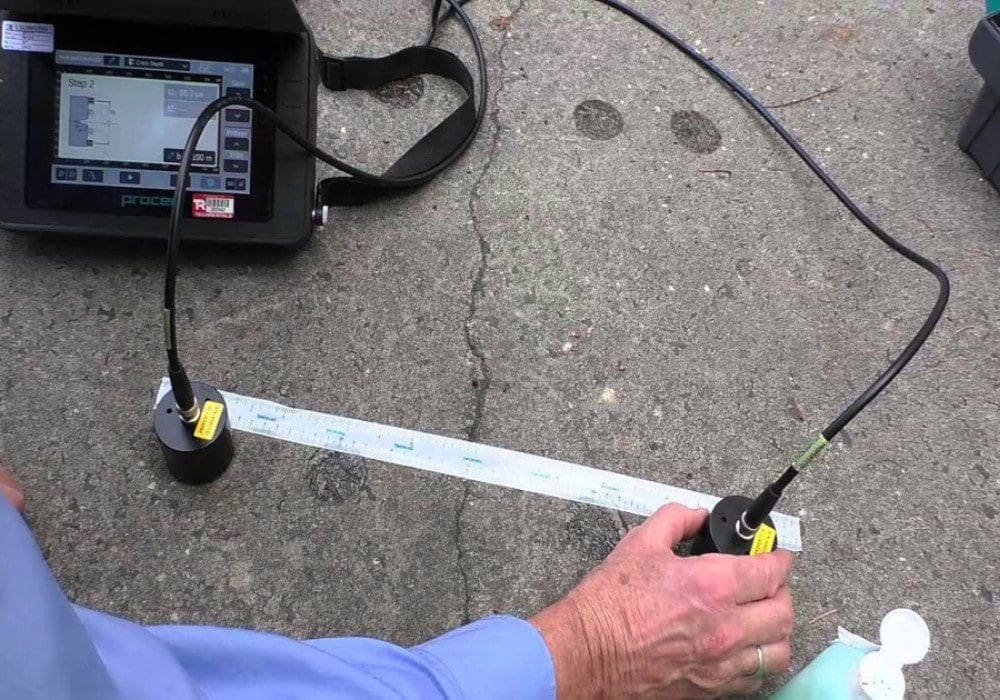
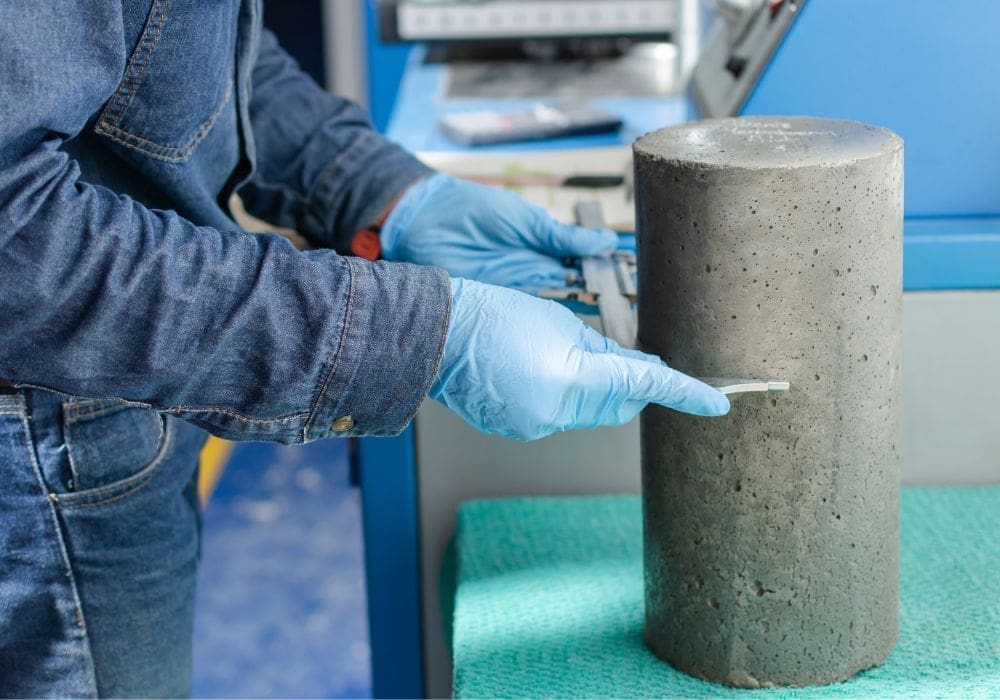
How the Mass Concrete Temperature Monitoring is Conducted
- 1
Sensor Planning & Embedment
Thermocouple or RTD sensor positions are planned at the thermal core, mid-depth and near-surface of the pour based on section thickness, then tied to reinforcement before casting so they remain fixed during the pour. - 2
Datalogger Commissioning
Sensors are wired to a multi-channel datalogger, zero-checked against a reference thermometer, and set to log at a fixed interval (typically every 15–30 minutes) from the moment of casting. - 3
Continuous Logging Through Peak Hydration
Temperature is logged continuously through the heat-of-hydration peak (usually 24–72 hours after casting), with core, mid-depth and surface readings compared in real time. - 4
Differential Check Against IS 16700:2017
The core-to-surface temperature differential and the absolute peak temperature are checked against the IS 16700:2017 limits at each logging interval; any approach to the threshold is flagged for immediate cooling or insulation action. - 5
Reporting
On completion of the monitoring window, temperature-time and differential-temperature graphs are compiled into a report verifying compliance (or documenting any deviation and the corrective action taken), issued via Autovity QLMS.
Applicable Test Standards
| Standard | Title | Scope | Type |
|---|---|---|---|
| IS 456:2000 | Plain and Reinforced Concrete — Code of Practice | Mass Concrete Provisions | Indian Standard |
| IS 7861 (Part 1):1975 | Code of Practice for Extreme Weather Concreting — Hot Weather Concreting | Hot-Weather Precautions | Indian Standard |
| IS 16700:2017 | Criteria for Structural Design of Tall Concrete Buildings | Peak Temperature Limit (70°C) | Indian Standard |