
Concrete Maturity Test(ASTM C1074 — Maturity Method)
In-place concrete strength estimation using the ASTM C1074 maturity method — embedded temperature sensors and a lab-established strength-maturity relationship give real-time strength estimates for formwork removal and post-tensioning decisions.
What is the Concrete Maturity Test?
The maturity method (ASTM C1074, Standard Practice for Estimating Concrete Strength by the Maturity Method) estimates in-place concrete strength from its temperature history rather than waiting for companion cube results. Concrete strength gain depends on both time and curing temperature — the maturity method combines the two into a single temperature-time factor (TTF) using the Nurse-Saul function, correlated in the lab to a strength-maturity curve for the specific mix.
Global Lab first establishes the strength-maturity relationship for the project mix design by casting and testing calibration cubes at multiple ages under controlled temperature. Maturity loggers or embedded temperature sensors are then placed in the actual structural element; the live temperature-time factor is compared against the calibration curve to estimate in-place strength at any point — used to time formwork striking, post-tensioning, or opening a pavement to traffic without waiting for a separate cube break.
Concrete Maturity Test — Site Images

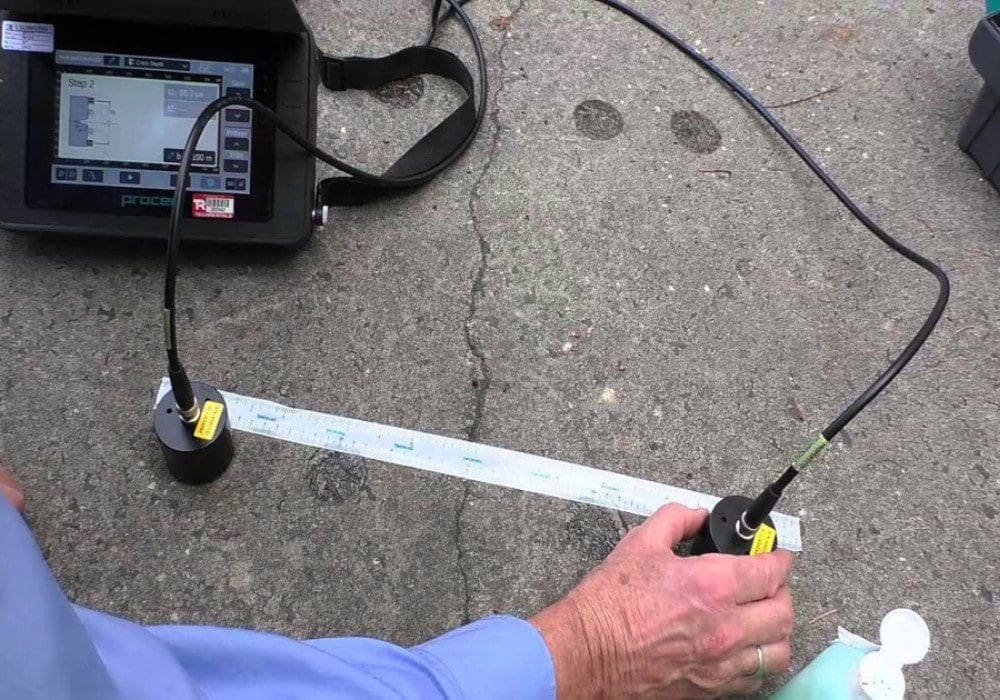
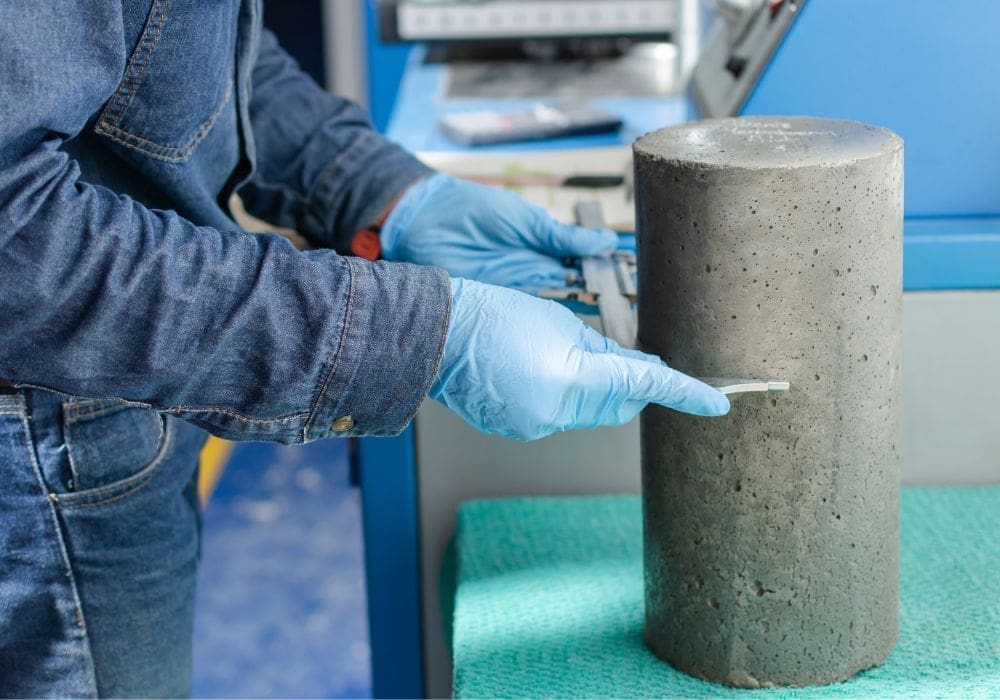
How the Concrete Maturity Test is Conducted
- 1
Mix-Specific Calibration
Cubes of the project concrete mix are cast and cured under controlled temperature, then tested for compressive strength at multiple ages to build the strength-maturity (Nurse-Saul) relationship in the lab. - 2
Sensor Embedment
Maturity meters or temperature loggers are embedded at the representative location in the structural element (e.g. slab mid-depth) immediately before or during casting. - 3
Continuous Temperature Logging
Temperature is logged continuously from the moment of casting, and the temperature-time factor (TTF) is computed in real time. - 4
Strength Estimation from the Calibration Curve
The live TTF reading is plotted against the lab-established strength-maturity curve to estimate the in-place compressive strength at any given time. - 5
Verification & Reporting
A sample of maturity-based strength estimates is periodically verified against companion cube breaks; the full maturity curve and estimated strength history are reported via Autovity QLMS.
Applicable Test Standards
| Standard | Title | Scope | Type |
|---|---|---|---|
| ASTM C1074 | Standard Practice for Estimating Concrete Strength by the Maturity Method | Maturity Method | ASTM Standard |
| IS 456:2000 | Plain and Reinforced Concrete — Code of Practice | Reference Strength Criteria | Indian Standard |