
NABL Accredited · Dimensional Calibration
Gang Mould Calibration
(IS 10086 — Cement Mortar Prism Mould)
NABL-accredited calibration of gang moulds (40×40×160mm mortar prism moulds) per IS 10086 — verifying all three compartment dimensions and dividing plate alignment for IS 4031 cement strength testing.
IS 10086
Standard
±0.2mm
Accuracy
1 Day
Report TAT
NABL
Accredited
NABL Accredited Lab · ISO/IEC 17025:2017
Digital Reports via Autovity QLMS
Pan-India · 7 Lab Locations
Est. 2009 · 20,000+ Projects
Overview
What is the Gang Mould Calibration?
Gang Moulds produce three 40×40×160mm mortar prisms simultaneously for IS 4031 Parts 5 and 6 cement strength testing. IS 10086: compartment dimensions 40×40×160mm ±0.2mm. Out-of-dimension moulds give systematically incorrect cement strength.
At Global Lab, gang mould calibration verifies all three compartments individually — 40mm width (±0.2mm), 40mm height (±0.2mm), 160mm length (±0.5mm), dividing plate alignment and base/top flatness. All three compartments reported individually on the NABL certificate.
Reviewed by Global Lab Technical Team — NABL Accredited Laboratory, Global Lab India
Non-Destructive
Minimal surface preparation. Structure integrity is preserved throughout testing.
Fast Turnaround
On-site results within hours. Digital reports dispatched within 24 hours.
NABL Certified
All test and calibration results are backed by traceable measurements and standardized procedures.
Pan-India Coverage
Site engineers deployed across 7 lab locations and all major project sites.
Digital Reporting
Access reports anytime via Autovity QLMS client dashboard — zero paperwork.
High Accuracy
Results correlated to cube compressive strength with ±2% precision range.
Test in Action
Gang Mould Calibration — Site Images
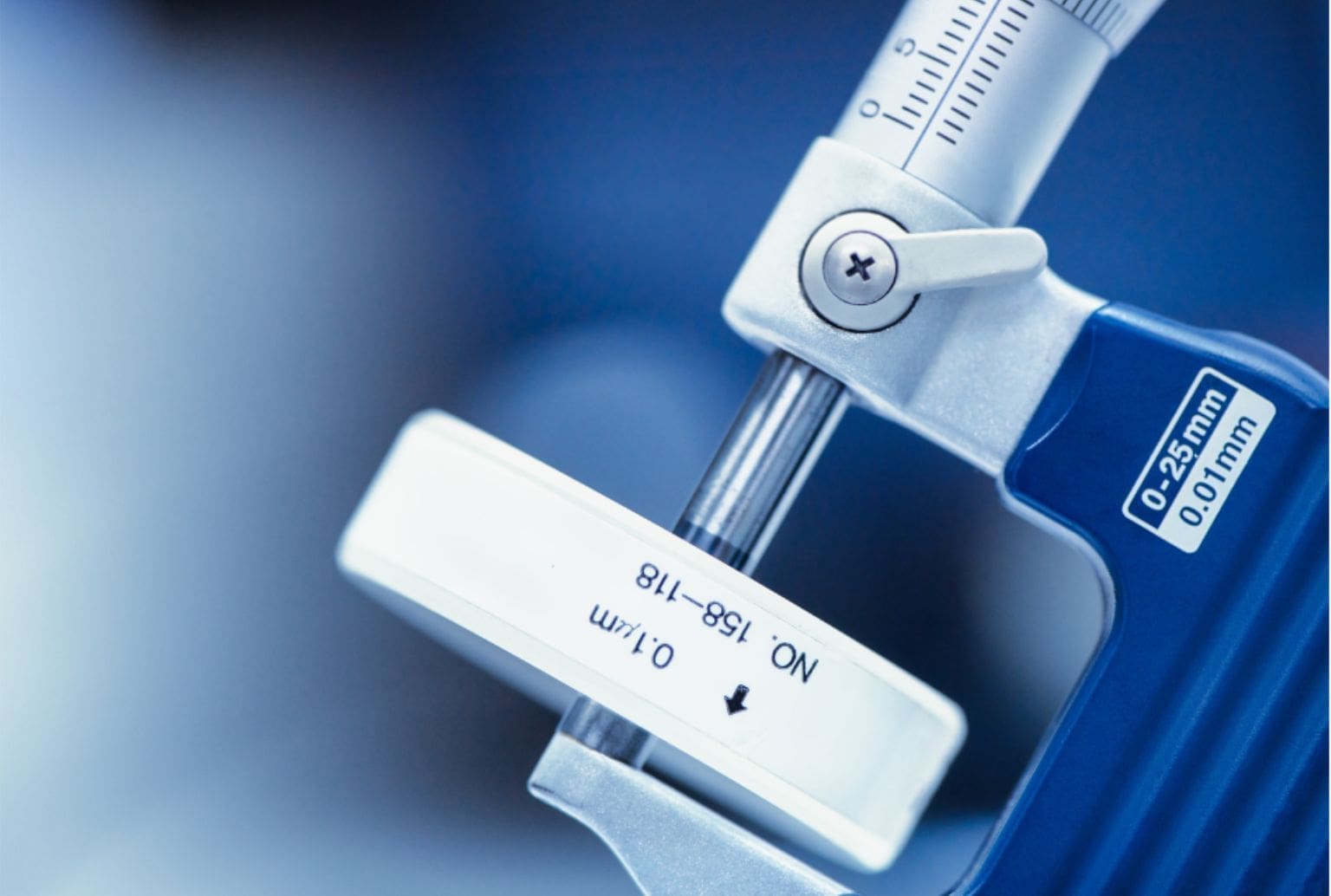
Gang Mould — All 3 Compartments Measured Individually
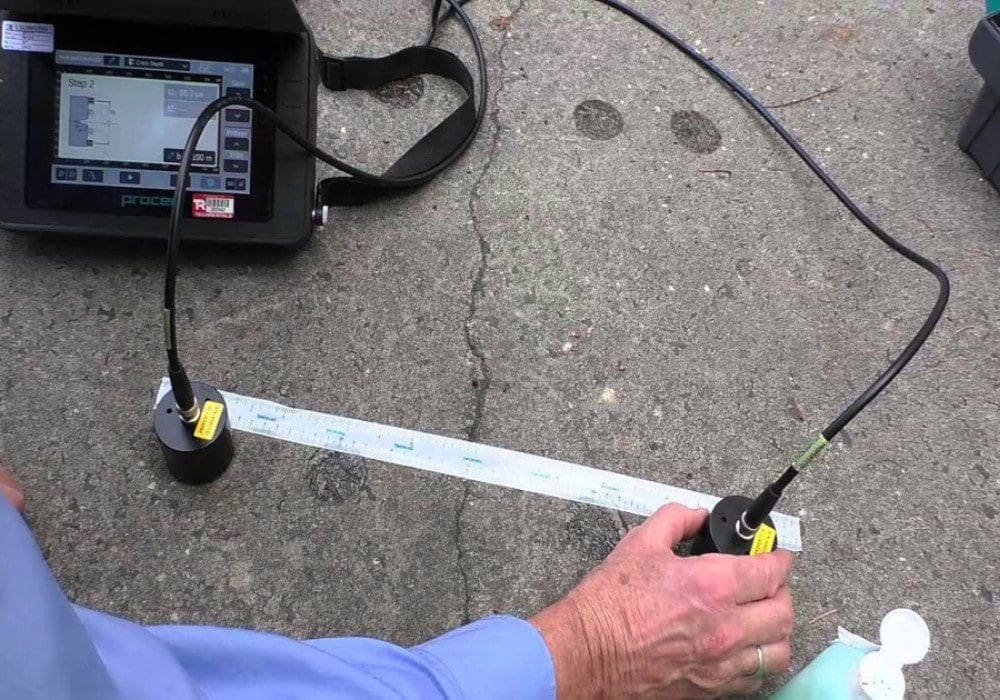
Dividing Plate Perpendicularity with Precision Square
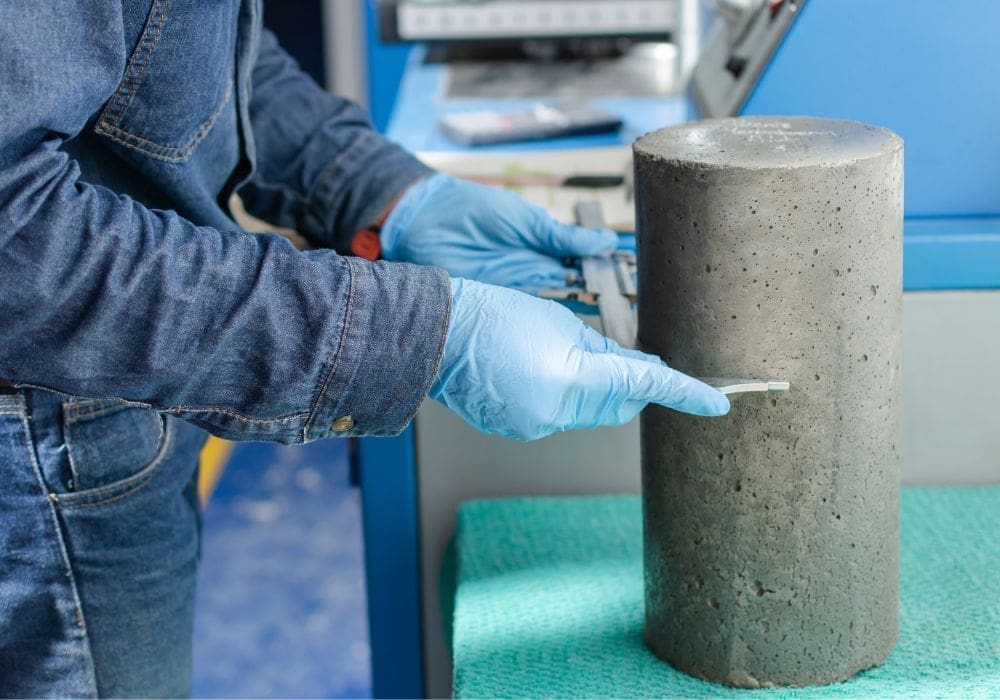
NABL Certificate with 3 Compartment Dimensions
Test Procedure
How the Gang Mould Calibration is Conducted
-
1
Surface Preparation
A shallow groove (approx. 25mm deep) is cut into the concrete surface using a diamond-tipped cutting tool. The surface is cleaned of dust and debris. -
2
Insert Disc Placement
A specially designed steel insert disc is placed into the groove. A thin rod connects the disc to the pullout apparatus above the surface. -
3
Hydraulic Pullout Force Application
A hydraulic jack applies a steady, controlled pullout force to the insert disc via the reaction ring resting on the concrete surface. -
4
Failure Load Recording
The maximum force at which the concrete cone is extracted is recorded. A digital load indicator provides real-time readings with data logging. -
5
Strength Calculation & Reporting
The pullout force is correlated to cube compressive strength using established calibration curves. NABL-accredited reports are issued via Autovity QLMS.
Standards & Specifications
Applicable Test Standards
| Standard | Title | Scope | Type |
|---|---|---|---|
| IS 10086 | Specification for Moulds for Tests of Cement and Concrete | Mould Standard | Indian Standard |
| IS 4031 Part 6 | Physical Tests for Hydraulic Cement — Determination of Compressive Strength (Other Than Masonry Cement) | Cement Strength | Indian Standard |
| IS 4031 Part 8 | Physical Tests for Hydraulic Cement — Determination of Transverse and Compressive Strength of Plastic Mortar Using Prism | Cement Flexural | Indian Standard |
| NABL-141 | NABL Policy on Metrological Traceability |
Applications
Where is the Gang Mould Calibration Used?
Annual gang mould calibration for NABL cement laboratory
IS 4031 Part 6 cement compressive strength mould calibration
BIS-licensed cement manufacturer QC laboratory
RMC plant cement incoming QC gang mould calibration
Pre-NABL assessment for cement lab scope
Research institute cement hydration study
Why Choose Global Lab
Our Advantages
NABL Accredited CertificatesIS 10086 gang mould certificates with all 3 compartments reported.
Three CompartmentsEach individually verified — asymmetric wear identified.
Cement Lab PackageGang + Le-Chatelier + Vicat + Shrinkage in one visit.
Fast 1-Day CertificateCertificate within 1 working day.
Pan-India CoverageDimensional calibration at all 7 locations.
Cement Lab ExpertiseExperienced in all IS 4031 equipment calibration.