
Granular Sub-Base (GSB) Testing(MoRTH Section 400 · IS 2720)
Gradation, plasticity, moisture-density and sand-equivalent testing of granular sub-base (GSB) material per MoRTH Section 400 and IS 2720, verifying pavement sub-base material against the specified grading envelope.
What is Granular Sub-Base (GSB) Testing?
Granular Sub-Base (GSB) is the compacted layer of graded natural or processed aggregate placed beneath the base course in road and pavement construction, providing structural support and drainage. Material quality is governed by MoRTH Section 400 (Table 400-1/400-2 grading envelopes — Grading I, II or III) for particle-size distribution, with IS 2720 supplying the individual test methods used to verify each property.
Global Lab tests GSB material for particle-size gradation per IS 2720 (Part 4), Atterberg limits (liquid limit and plasticity index — required ≤25% and ≤6% respectively for the fraction passing the 425-micron sieve) per IS 2720 (Part 5), moisture-density relationship (OMC/MDD via Proctor compaction) per IS 2720 (Part 8), and sand equivalent value (minimum 50 required) per IS 2720 (Part 37) — confirming the material meets the MoRTH grading and quality envelope before it is laid and compacted.
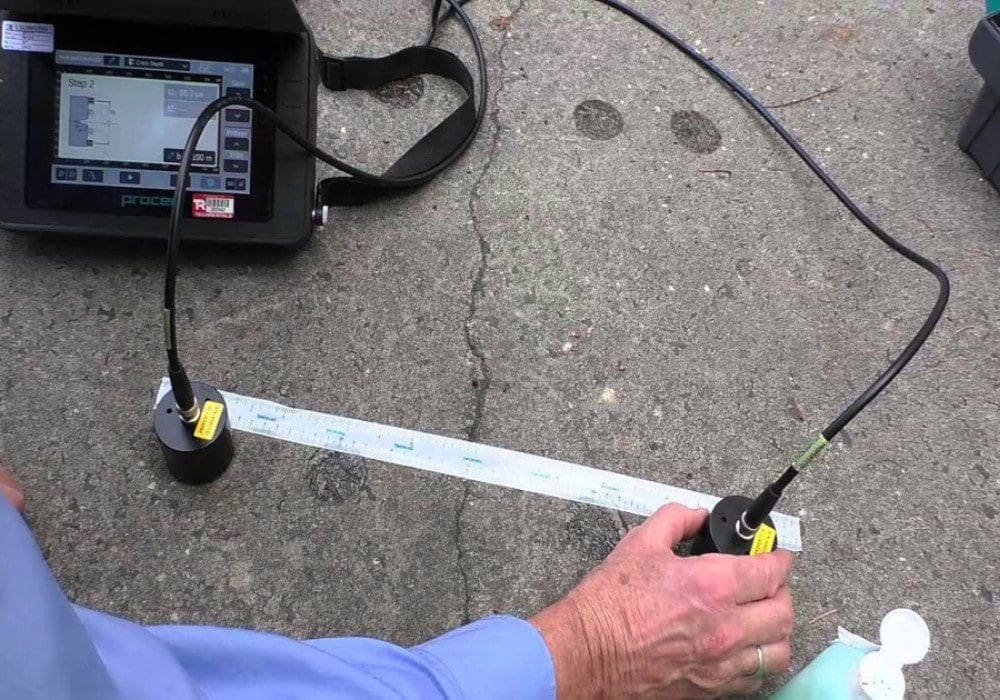
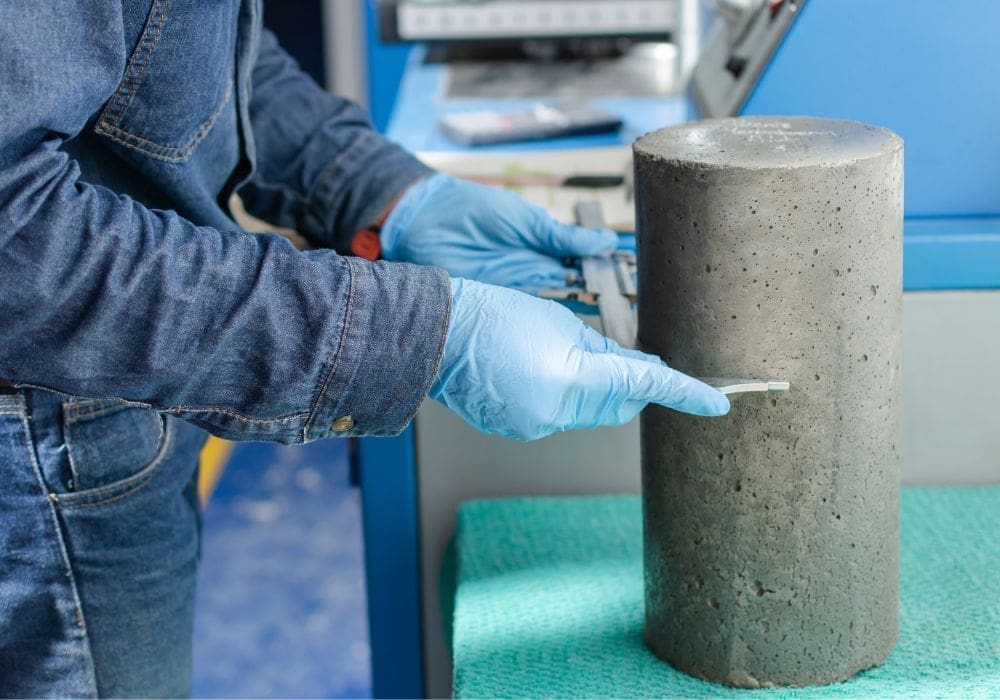
Granular Sub-Base (GSB) Testing — Site Images

How the Granular Sub-Base (GSB) Testing is Conducted
- 1
Representative Sampling
A representative sample is collected from the approved source or stockpile, following a sampling frequency of at least once per day per source or on any noticeable change in material quality. - 2
Gradation (Sieve Analysis)
The sample is sieved through the standard set per IS 2720 (Part 4) and the particle-size distribution is checked against the MoRTH Section 400 grading envelope (Grading I/II/III as specified). - 3
Atterberg Limits
The material fraction passing the 425-micron sieve is tested for liquid limit and plasticity index per IS 2720 (Part 5), checked against the MoRTH limits of LL ≤ 25% and PI ≤ 6%. - 4
Moisture-Density Relationship
A Proctor compaction test per IS 2720 (Part 8) establishes the optimum moisture content (OMC) and maximum dry density (MDD) used as the compaction target on site. - 5
Sand Equivalent & Reporting
The sand equivalent value of material passing the 4.75 mm sieve is determined per IS 2720 (Part 37), required to be not less than 50; results are compiled into a NABL-accredited report issued via Autovity QLMS.
Applicable Test Standards
| Standard | Title | Scope | Type |
|---|---|---|---|
| MoRTH Section 400 | Ministry of Road Transport & Highways Specifications — Granular Sub-Base | Grading Envelope (Table 400-1/400-2) | MoRTH Specification |
| IS 2720 (Part 4):1985 | Methods of Test for Soils, Part 4: Grain Size Analysis | Gradation | Indian Standard |
| IS 2720 (Part 5):1985 | Methods of Test for Soils, Part 5: Liquid and Plastic Limit | Atterberg Limits | Indian Standard |
| IS 2720 (Part 8):1983 | Methods of Test for Soils, Part 8: Compaction (Heavy) | Moisture-Density (Proctor) | Indian Standard |
| IS 2720 (Part 37):1976 | Methods of Test for Soils, Part 37: Sand Equivalent | Sand Equivalent Value | Indian Standard |