
Water Proofing Compound Testing(IS 2645:2003, Reaffirmed 2017)
Performance testing of integral waterproofing compounds for cement mortar and concrete per IS 2645:2003 — permeability, compressive strength effect and chloride content, verifying compound performance against the specification.
What is Water Proofing Compound Testing?
Integral waterproofing compounds are admixtures dosed into cement mortar or concrete to reduce water permeability — commonly used in tile bedding, plaster, water tanks, basements and podium waterproofing. IS 2645:2003 (Reaffirmed 2017) is the governing Indian Standard, specifying performance requirements assessed through water-permeability testing of treated versus untreated (control) mortar specimens, along with checks on cement compatibility and chloride content.
Global Lab casts control and compound-treated mortar cylinders side by side at the manufacturer's recommended dosage, cures them per the standard, then subjects both sets to a water-permeability test under pressure — measuring the depth or volume of water percolation through each specimen. Compressive strength of treated versus control specimens is compared to confirm the compound does not compromise mortar strength, and the compound is checked for water-soluble chloride content to guard against reinforcement corrosion risk.
Water Proofing Compound Testing — Site Images
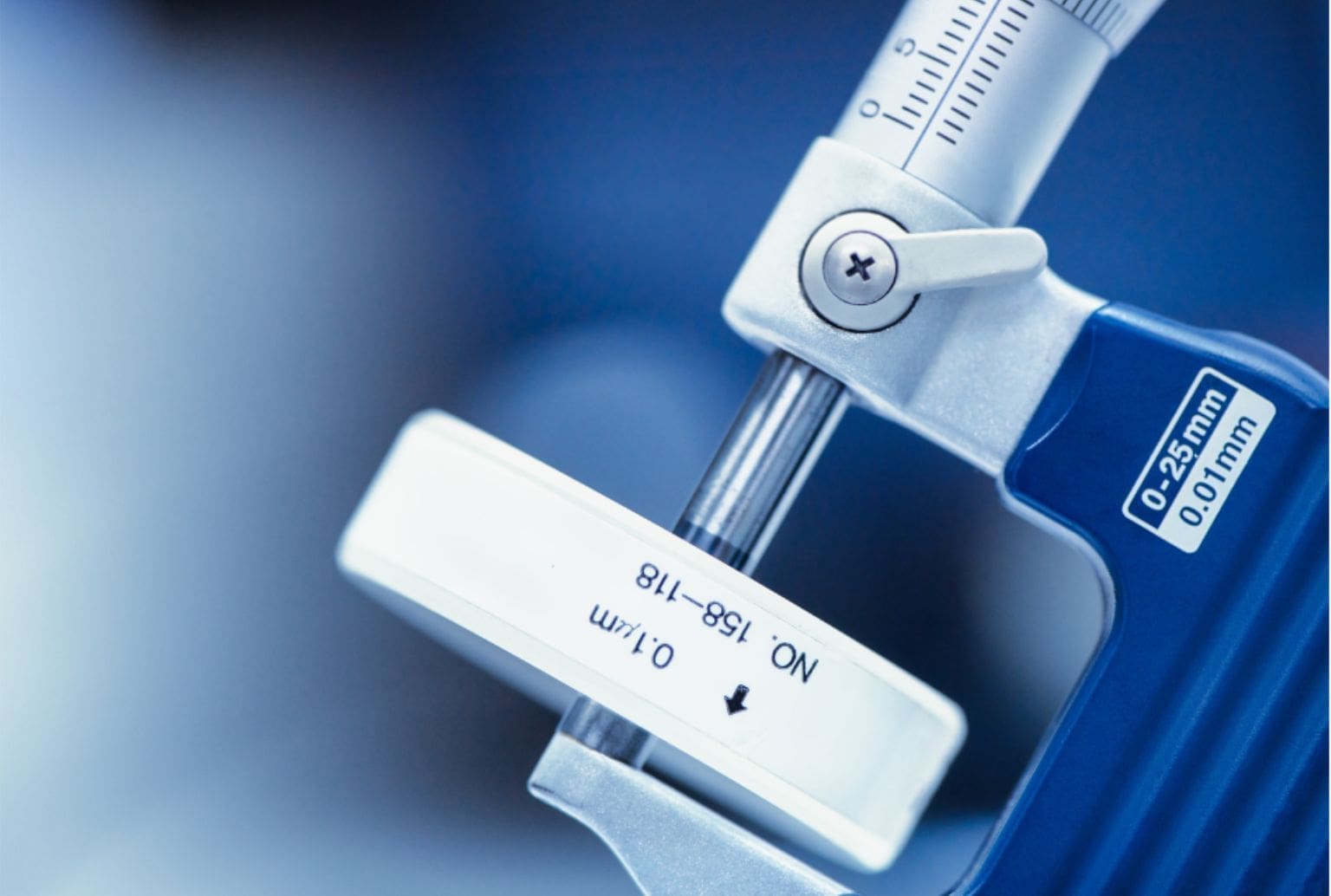
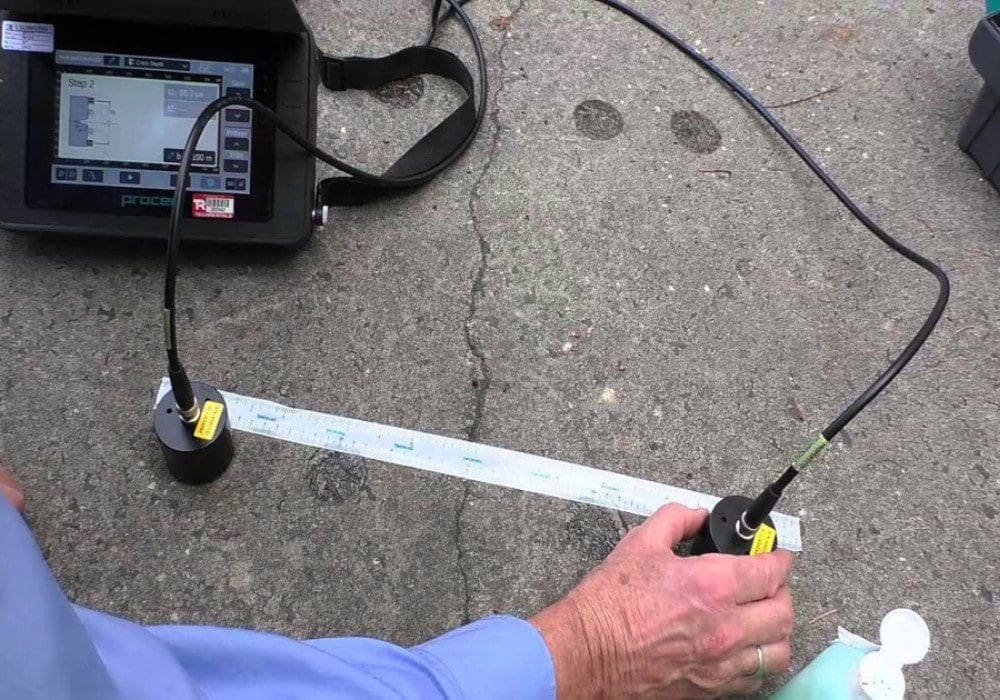
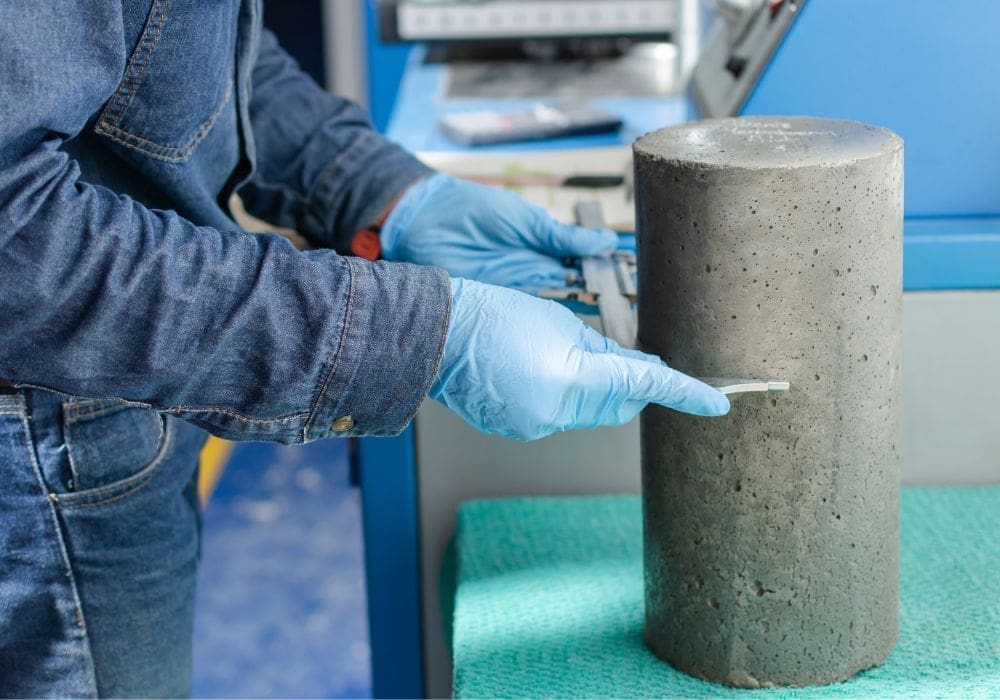
How the Water Proofing Compound Testing is Conducted
- 1
Control & Treated Specimen Casting
Mortar cylinders are cast in two sets — a plain control batch and a batch dosed with the waterproofing compound at the manufacturer's recommended rate — from the same base cement and sand. - 2
Standard Curing
Both specimen sets are cured under standard conditions for the period specified in IS 2645:2003 before permeability testing. - 3
Water Permeability Test
Cured specimens are subjected to water under pressure for the specified duration; the depth of water penetration (or percolation volume) is measured and compared between control and treated specimens. - 4
Compressive Strength Comparison
Companion cylinders from both sets are tested for compressive strength to confirm the waterproofing compound does not adversely affect mortar strength development. - 5
Chloride Content Check & Reporting
The compound is checked for water-soluble chloride content against the IS 2645:2003 limit, and a NABL-accredited report comparing treated versus control performance is issued via Autovity QLMS.
Applicable Test Standards
| Standard | Title | Scope | Type |
|---|---|---|---|
| IS 2645:2003 (R2017) | Integral Waterproofing Compounds for Cement Mortar and Concrete — Specification | Permeability & Chloride Limits | Indian Standard |