
Pull-Off Adhesion Strength of Wall Putty
(Putty Bond Strength — BS EN 1015-12)
In-situ measurement of the tensile bond strength of cement-based and polymer wall putty to concrete or plaster substrates — verifying putty application quality and substrate preparation adequacy.
What is the Pull-Off Adhesion Strength of Wall Putty?
The Pull-Off Adhesion Strength Test of Wall Putty measures the tensile bond between putty finish and its substrate using the standard hydraulic pull-off method. A 50mm steel dolly is bonded to the putty, core-drilled around and subjected to direct tensile pull-off. The failure load and mode reveal whether the putty, substrate or interface is the weak link.
Conducted as per BS EN 1015-12 and manufacturer specification requirements, this test is essential for premium residential, hospitality and commercial interior finishing projects, high-rise building facades with polymer putty systems and any specification requiring minimum putty bond strength.
Pull-Off Adhesion Strength of Wall Putty — Site Images
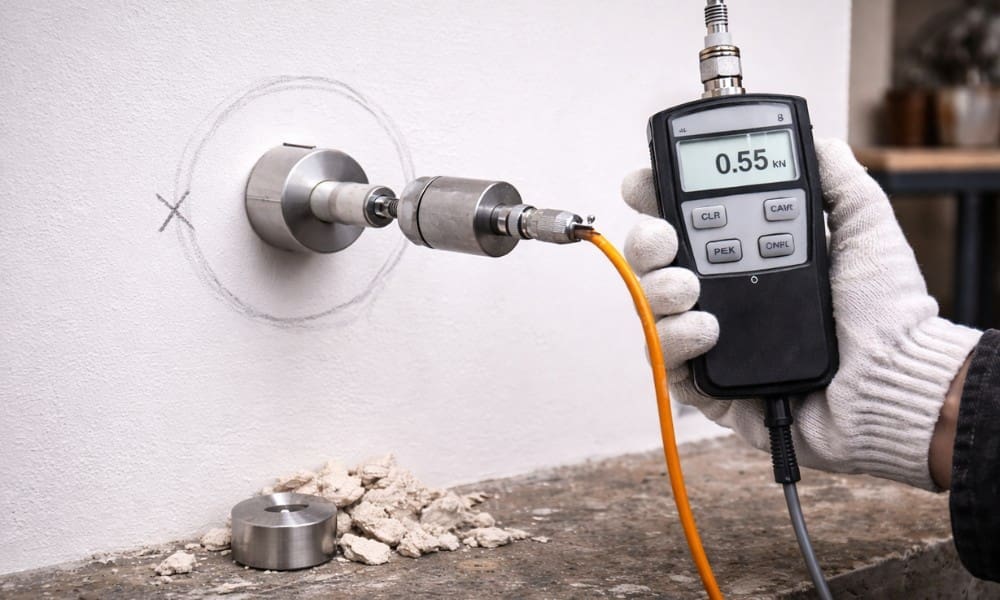
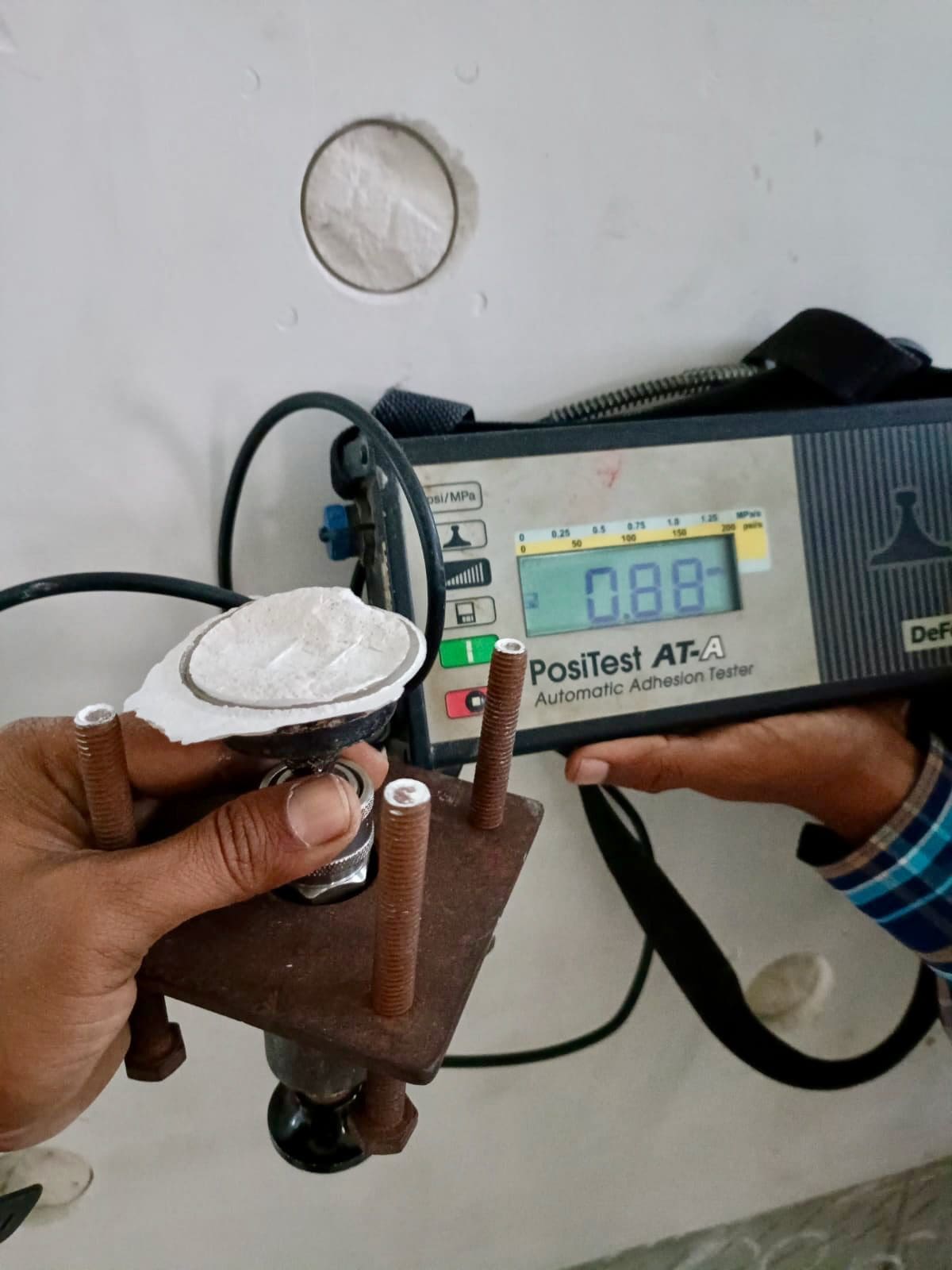
How the Pull-Off Adhesion Strength of Wall Putty is Conducted
-
1Dolly Bonding50mm steel dolly bonded to putty surface with two-part epoxy. 24-hour cure.
-
2Core Drilling50mm core drill cuts through putty layer around dolly to isolate test area.
-
3Pull-Off Tester SetupCalibrated hydraulic pull-off tester coupled to dolly.
-
4Load ApplicationTensile load applied at 0.05 N/mm²/s until failure.
-
5Result RecordingMaximum load, bond strength and failure mode recorded. NABL report within 24 hours.
Applicable Test Standards
| Standard | Title | Scope | Type |
|---|---|---|---|
| BS EN 1015-12 | Methods of Test for Mortar — Determination of Adhesive Strength of Hardened Rendering and Plastering Mortars | Pull-Off Test | British Standard |
| ASTM D4541 | Standard Test Method for Pull-Off Strength of Coatings | Pull-Off Test | ASTM |
| IS 6278 | White Washing and Colour Washing — Code of Practice | Wall Finishing | Indian Standard |
| BS EN 1542 | Measurement of Bond Strength by Pull-Off | Bond Strength | British Standard |