
Shrinkage Test of Concrete and Mortar(IS 4031 Part 10 — Drying Shrinkage)
Drying shrinkage testing of concrete and mortar prisms per IS 4031 (Part 10) — length-change measurement over a controlled drying period to assess crack risk and validate mix and admixture performance.
What is the Shrinkage Test of Concrete and Mortar?
Drying shrinkage is the reduction in volume a concrete or mortar element undergoes as it loses moisture to the surrounding environment after curing. Excessive shrinkage — driven by high cement content, poor curing, or reactive aggregates — restrains against reinforcement and adjacent structure, generating tensile stress that shows up as shrinkage cracking. IS 4031 (Part 10):1988 (Reaffirmed) sets out the standard drying-shrinkage test method for cement mortar, widely applied to concrete mix and admixture evaluation as well.
Global Lab casts standard prism specimens with embedded gauge studs, demoulds and takes an initial length reading on a length comparator, then stores the specimens under controlled drying conditions and re-measures length at defined intervals — typically 1, 4, 8, 16 and 32 weeks — to build the full shrinkage-time curve. The result quantifies shrinkage strain (expressed in microstrain or % length change) and is used to compare mix designs, validate shrinkage-reducing admixtures, and flag mixes at elevated cracking risk.
Shrinkage Test of Concrete and Mortar — Site Images
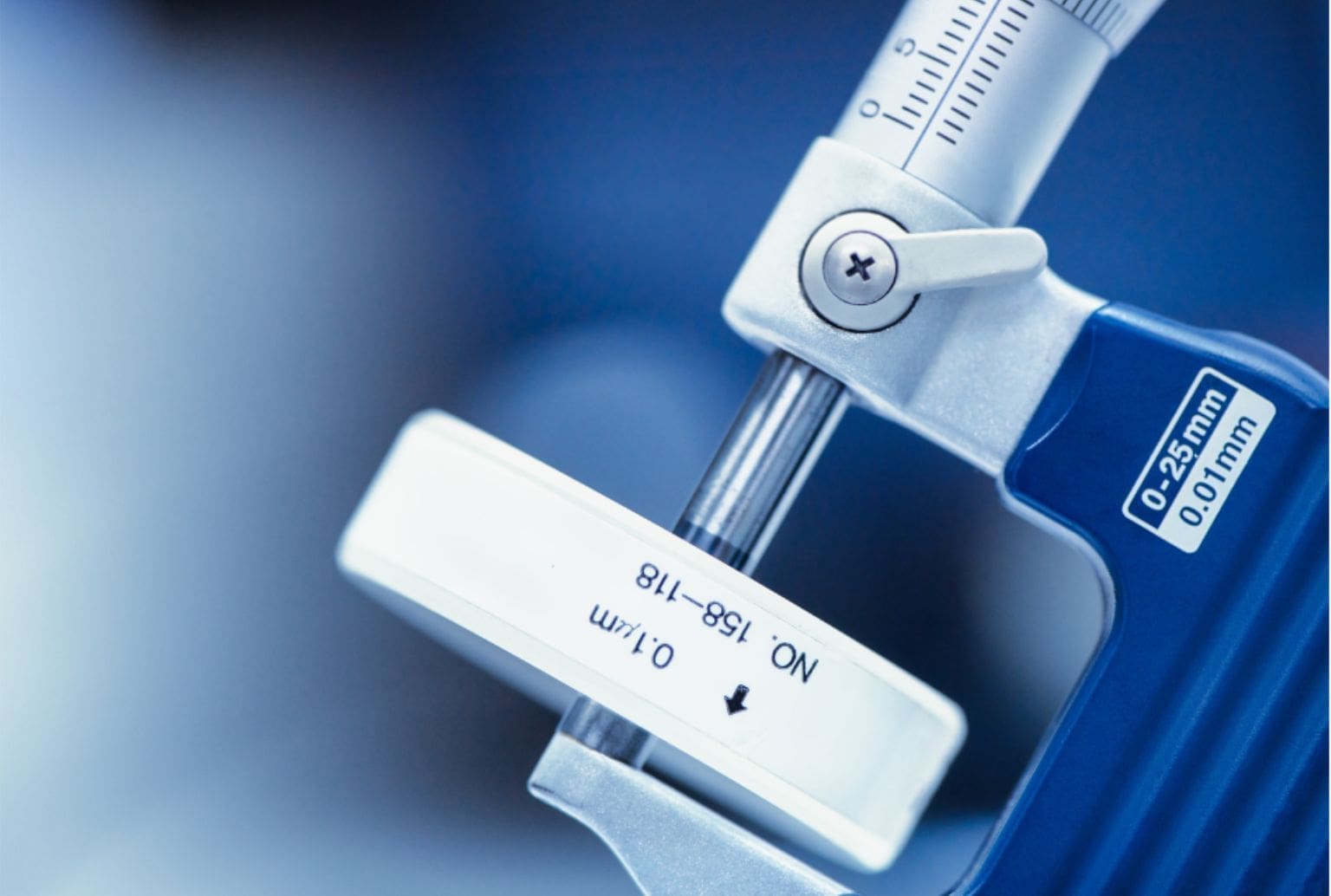
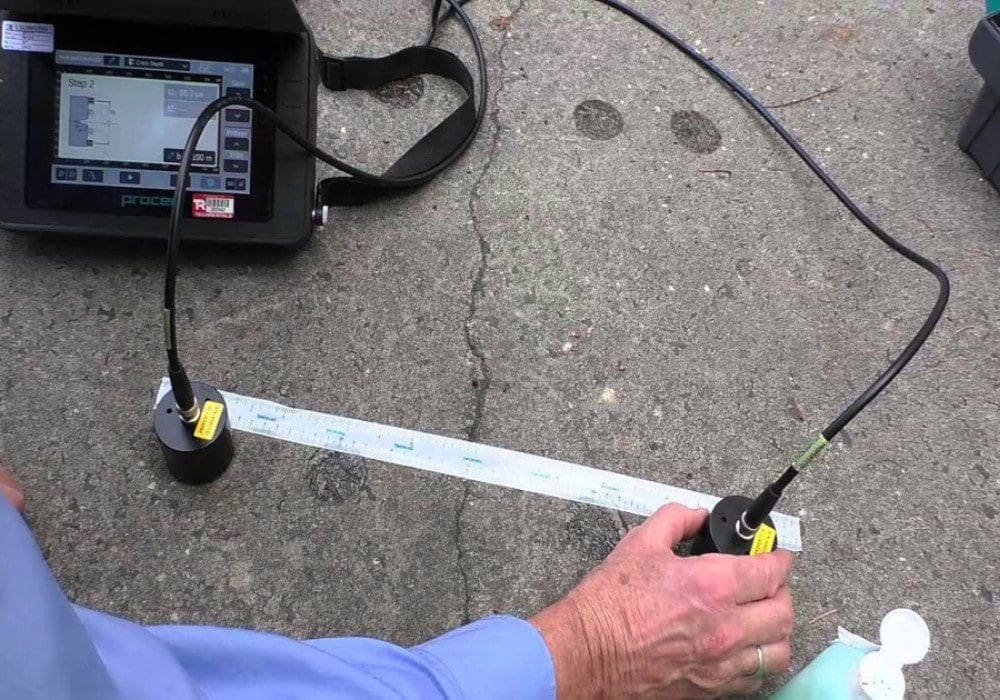
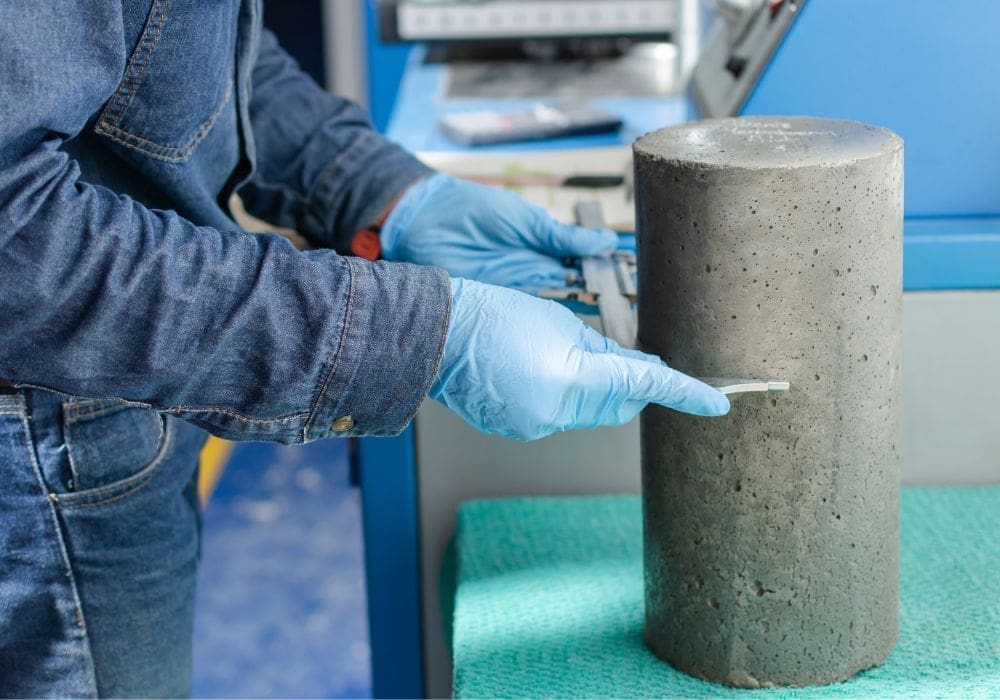
How the Shrinkage Test of Concrete and Mortar is Conducted
- 1
Specimen Casting
Standard prism specimens (typically 25×25×250 mm) with embedded gauge studs at each end are cast from the mortar or concrete mix under test and cured for the initial 24-hour period. - 2
Demoulding & Zero Reading
Specimens are demoulded and an initial (zero) length reading is taken on a calibrated length comparator immediately before the drying period begins. - 3
Controlled Drying Storage
Specimens are stored under the controlled temperature and humidity conditions specified in IS 4031 (Part 10) to induce consistent, comparable drying shrinkage. - 4
Periodic Length Measurement
Length is re-measured at fixed intervals — typically 1, 4, 8, 16 and 32 weeks — on the same comparator, with each reading compared to the zero reading. - 5
Shrinkage Strain Calculation & Reporting
Shrinkage strain is calculated as the change in length divided by the gauge length at each interval, plotted as a shrinkage-time curve, and issued as a NABL-accredited report via Autovity QLMS.
Applicable Test Standards
| Standard | Title | Scope | Type |
|---|---|---|---|
| IS 4031 (Part 10):1988 | Methods of Physical Tests for Hydraulic Cement, Part 10: Determination of Drying Shrinkage | Drying Shrinkage Method | Indian Standard |