
Crack Width Monitoring
(Optical and Electronic Crack Width Measurement)
Precision measurement and long-term monitoring of concrete crack widths using optical gauges and vibrating wire crack meters — tracking crack progression for structural assessment and safety management.
What is the Crack Width Monitoring?
Crack Width Monitoring combines one-time optical measurement of existing crack widths with long-term electronic monitoring of crack mouth opening displacement using vibrating wire crack meters. IS 456 specifies maximum crack widths of 0.2mm (aggressive) to 0.3mm (mild environment).
At Global Lab, crack width measurement uses calibrated optical crack gauges (0.05mm resolution) for snapshot measurements and DEMEC gauges or vibrating wire crack meters for periodic or continuous monitoring. Data distinguishes active growing cracks from stable dormant cracks.
Crack Width Monitoring — Site Images

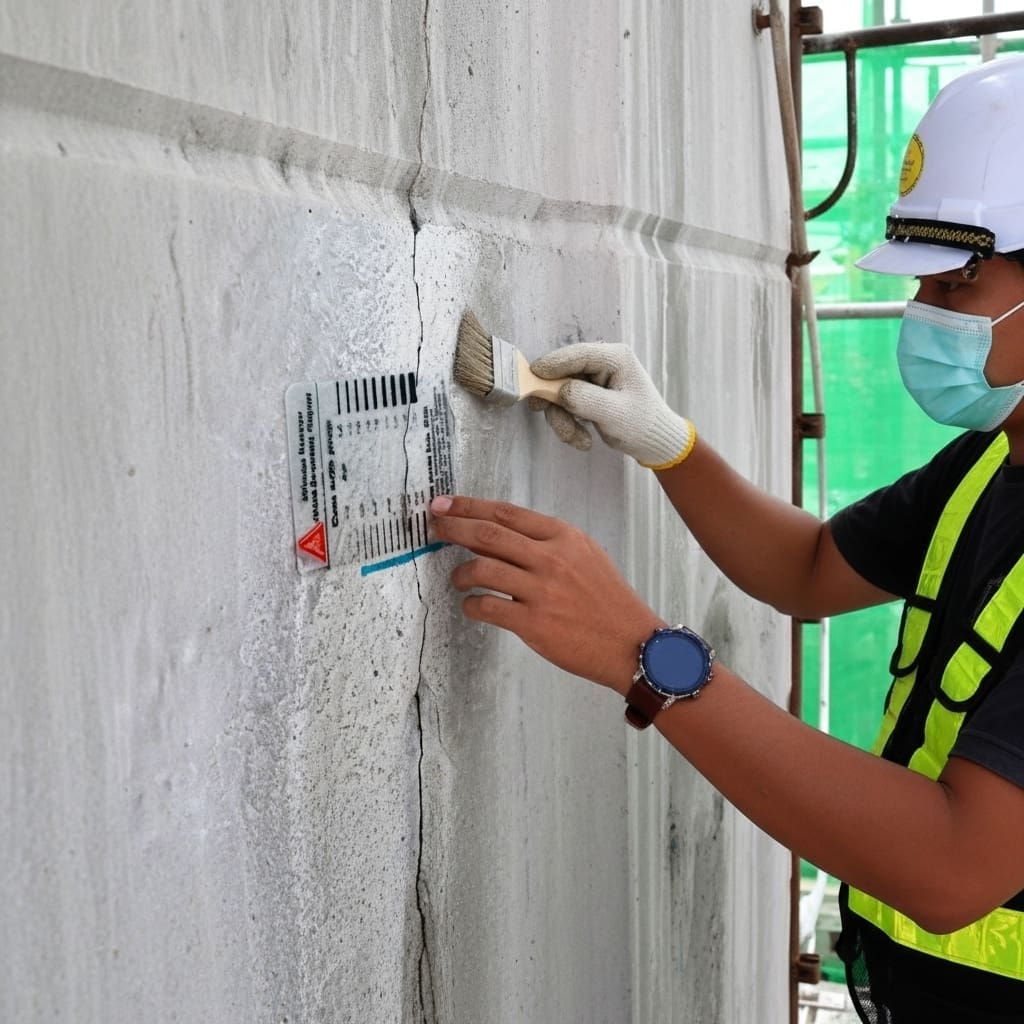
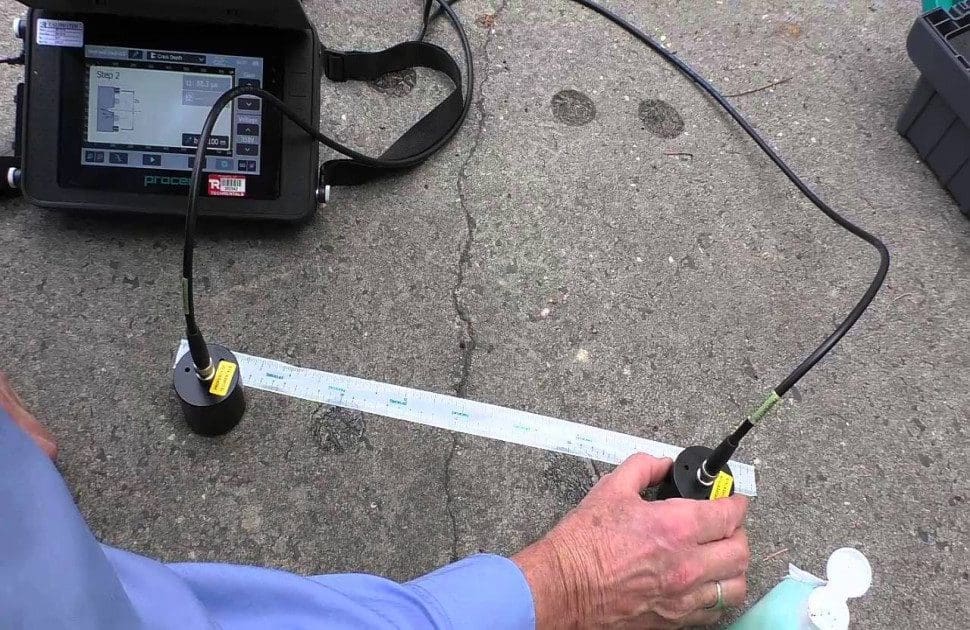
How the Crack Width Monitoring is Conducted
-
1Crack IdentificationAll visible cracks marked, numbered and measured on element sketch plan.
-
2Optical Width MeasurementCalibrated optical crack gauge placed over each crack. Width measured at representative points.
-
3Crack Meter InstallationDEMEC gauge points or vibrating wire crack meters installed across critical cracks.
-
4Baseline ReadingInitial readings taken under known conditions (temperature, live load state).
-
5Periodic Monitoring & ReportReadings at specified intervals. Crack progression plotted. NABL report issued within 24 hours.
Applicable Test Standards
| Standard | Title | Scope | Type |
|---|---|---|---|
| IS 456:2000 | Plain and Reinforced Concrete — Code of Practice (Crack Width Limits) | Crack Limits | Indian Standard |
| ACI 224R | Control of Cracking in Concrete Structures | Crack Assessment | ACI |
| BS 8110 | Structural Use of Concrete — Code of Practice | Crack Width | British Standard |
| IS 13311 | Non-Destructive Testing of Concrete — Recommendations | General NDT | Indian Standard |