
NABL Accredited · Dimensional Calibration
Feeler Gauge Calibration
(IS 3548 — Thickness Blade Calibration)
NABL-accredited calibration of feeler gauges per IS 3548 — verifying blade thickness accuracy of each leaf against NPL-traceable references for gap and clearance measurement in construction testing.
IS 3548
Standard
±1μm
Accuracy
1 Day
Report TAT
NABL
Accredited
NABL Accredited Lab · ISO/IEC 17025:2017
Digital Reports via Autovity QLMS
Pan-India · 7 Lab Locations
Est. 2009 · 20,000+ Projects
Overview
What is the Feeler Gauge Calibration?
Feeler Gauges are sets of precision steel blades used to measure gaps, clearances and surface parallelism. In construction testing used for CTM platen parallelism, specimen surface flatness, sieve frame gaps and concrete mould corner gaps.
At Global Lab, feeler gauge calibration per IS 3548 measures each blade with a calibrated micrometer at three positions — near pivot, centre and free end. Maximum, minimum and mean thickness reported. IS 3548 tolerance checked for each blade.
Reviewed by Global Lab Technical Team — NABL Accredited Laboratory, Global Lab India
Non-Destructive
Minimal surface preparation. Structure integrity is preserved throughout testing.
Fast Turnaround
On-site results within hours. Digital reports dispatched within 24 hours.
NABL Certified
All test and calibration results are backed by traceable measurements and standardized procedures.
Pan-India Coverage
Site engineers deployed across 7 lab locations and all major project sites.
Digital Reporting
Access reports anytime via Autovity QLMS client dashboard — zero paperwork.
High Accuracy
Results correlated to cube compressive strength with ±2% precision range.
Test in Action
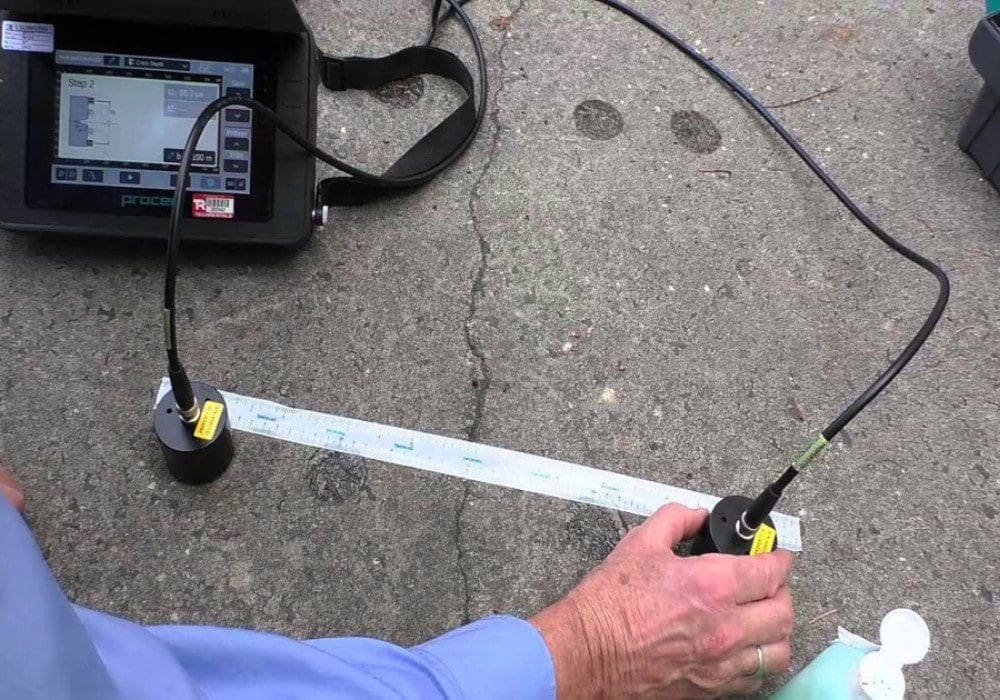
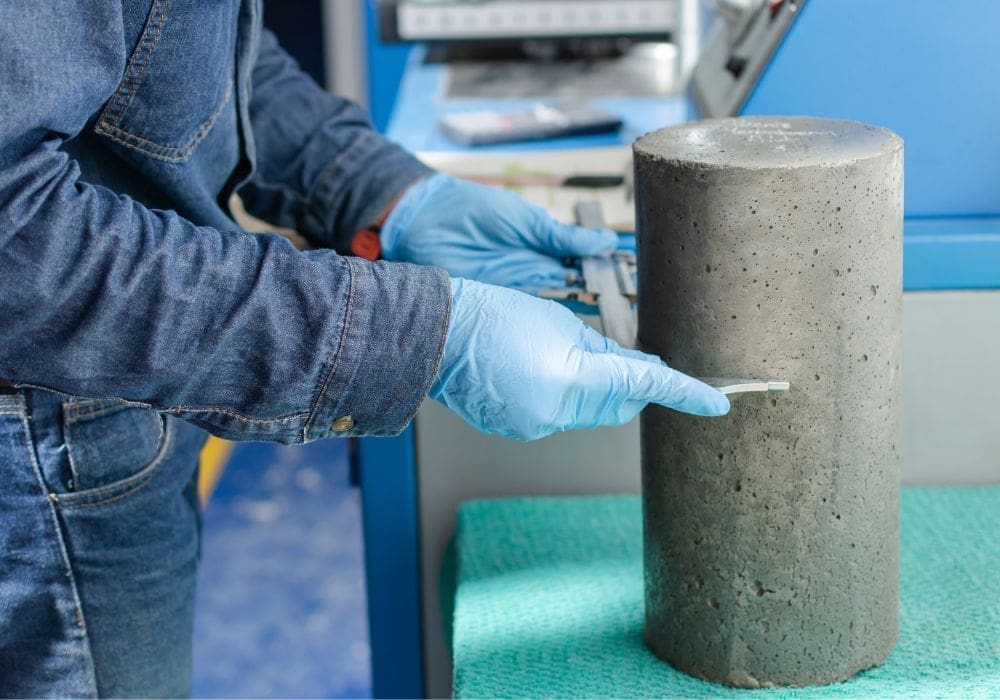
Feeler Gauge Calibration — Site Images
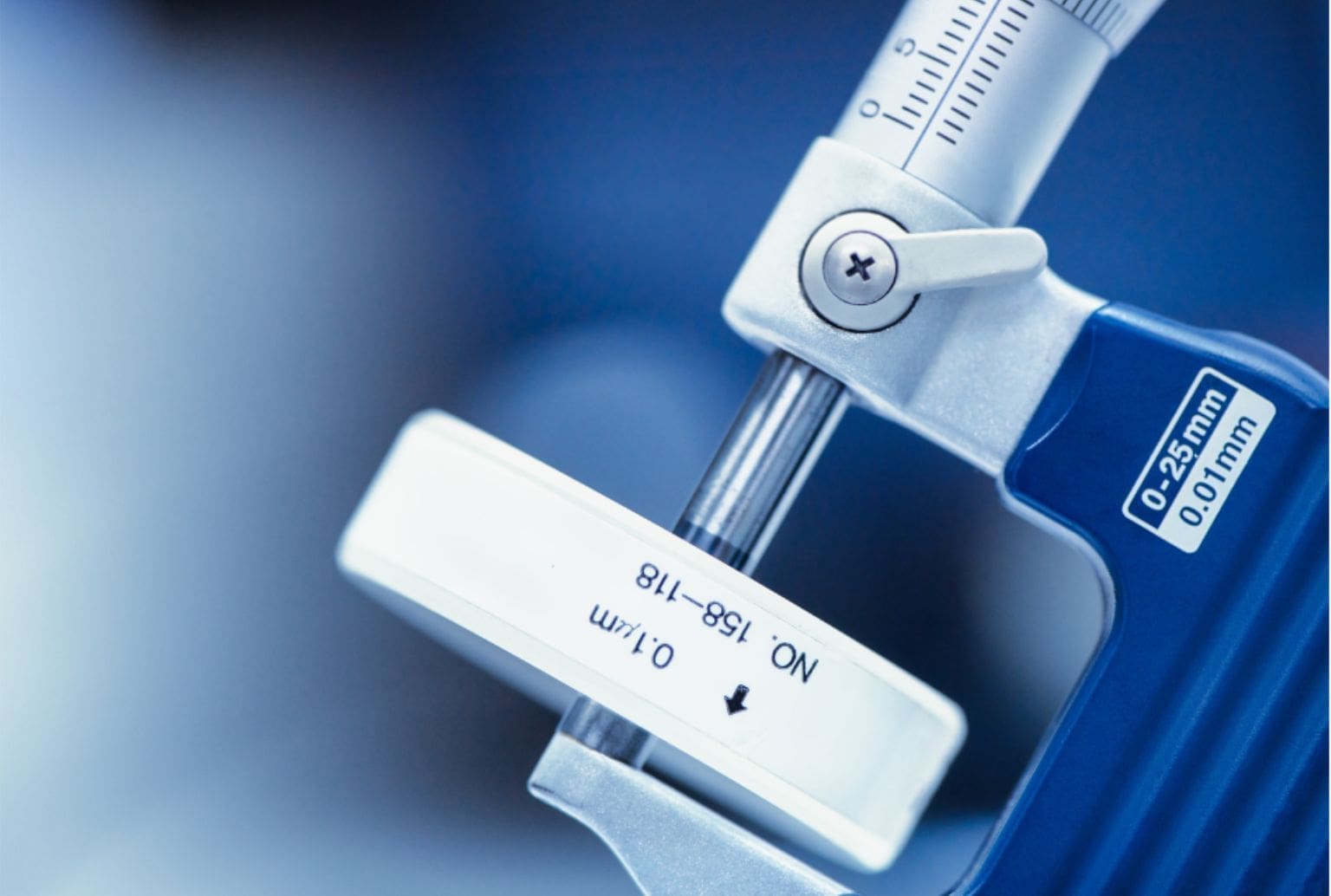
Each Feeler Gauge Blade Measured at Three Positions
Calibrated Micrometer NPL-Traceable Reference
NABL Certificate Listing Actual Thickness of Every Blade
Test Procedure
How the Feeler Gauge Calibration is Conducted
-
1
Surface Preparation
A shallow groove (approx. 25mm deep) is cut into the concrete surface using a diamond-tipped cutting tool. The surface is cleaned of dust and debris. -
2
Insert Disc Placement
A specially designed steel insert disc is placed into the groove. A thin rod connects the disc to the pullout apparatus above the surface. -
3
Hydraulic Pullout Force Application
A hydraulic jack applies a steady, controlled pullout force to the insert disc via the reaction ring resting on the concrete surface. -
4
Failure Load Recording
The maximum force at which the concrete cone is extracted is recorded. A digital load indicator provides real-time readings with data logging. -
5
Strength Calculation & Reporting
The pullout force is correlated to cube compressive strength using established calibration curves. NABL-accredited reports are issued via Autovity QLMS.
Standards & Specifications
Applicable Test Standards
| Standard | Title | Scope | Type |
|---|---|---|---|
| IS 3548 | Feeler Gauges — Specification | Feeler Gauge | Indian Standard |
| IS 2967 | External Micrometer | Reference Instrument | Indian Standard |
| IS 2984 | Gauge Blocks | Reference Standard | Indian Standard |
| NABL-141 | NABL Policy on Metrological Traceability |
Applications
Where is the Feeler Gauge Calibration Used?
CTM platen parallelism check feeler gauge calibration
NABL annual instrument calibration schedule
Test sieve frame gap checking calibration
Concrete mould corner gap checking calibration
Steel structure connection gap checking
Precast factory dimensional gap instruments
Why Choose Global Lab
Our Advantages
NABL Accredited CertificatesIS 3548 certificates listing actual thickness of every blade.
Worn Blade IdentificationWorn blades flagged to prevent measurement errors.
Fast 1-Day CertificateCertificate within 1 working day.
Full Range 0.02–1.00mmComplete standard feeler set covered.
Pan-India CoverageDimensional calibration at all 7 locations.
Batch SubmissionMultiple sets submitted together.