
Unconfined Compressive Strength Test
(UCS — IS 2720 Part 10)
Laboratory determination of unconfined compressive strength (qu) and undrained shear strength (Su = qu/2) of cohesive soils per IS 2720 Part 10 — for embankment stability, pile design and foundation bearing capacity.
What is the Unconfined Compressive Strength Test?
The Unconfined Compressive Strength (UCS) test measures the compressive strength of a cylindrical cohesive soil specimen with no lateral confining pressure. The specimen fails in shear under axial load, giving qu (kPa). The undrained shear strength Su = qu/2 — the most basic soil strength parameter for soft clay and stiff clay foundations, pile skin friction and embankment stability.
Conducted as per IS 2720 Part 10, the UCS test is applicable to cohesive soils (clays and silts) that maintain their shape without confinement. The test is rapid and inexpensive — a primary screening test before more complex triaxial testing. Global Lab conducts UCS on both undisturbed (tube samples) and remoulded specimens at field density, providing sensitivity ratio (St = qu(undisturbed)/qu(remoulded)) for soft clay assessment.
Unconfined Compressive Strength Test — Site Images
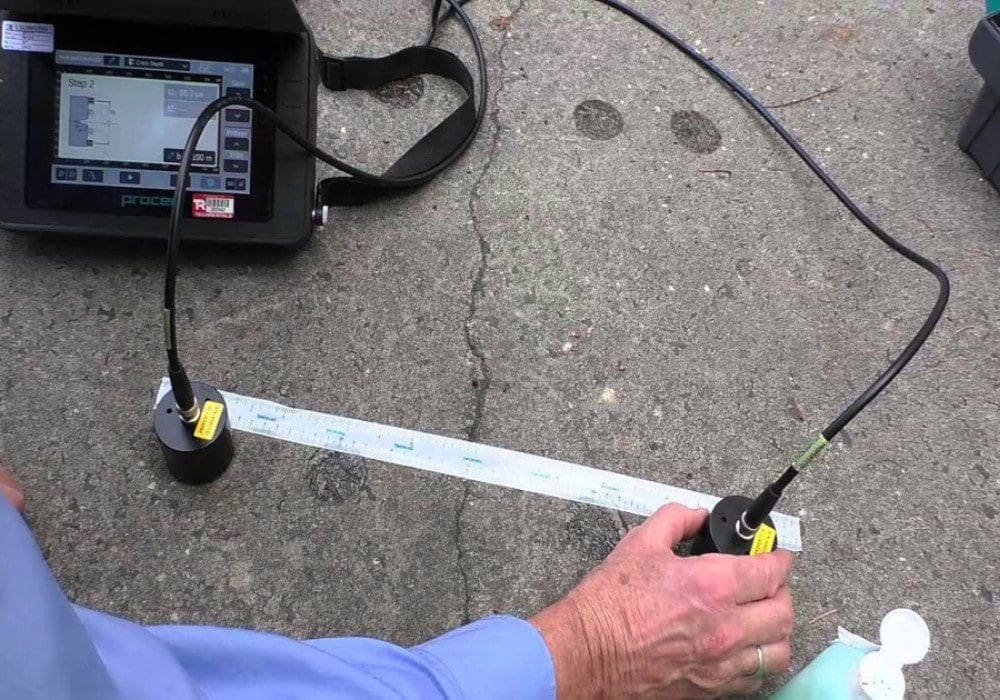
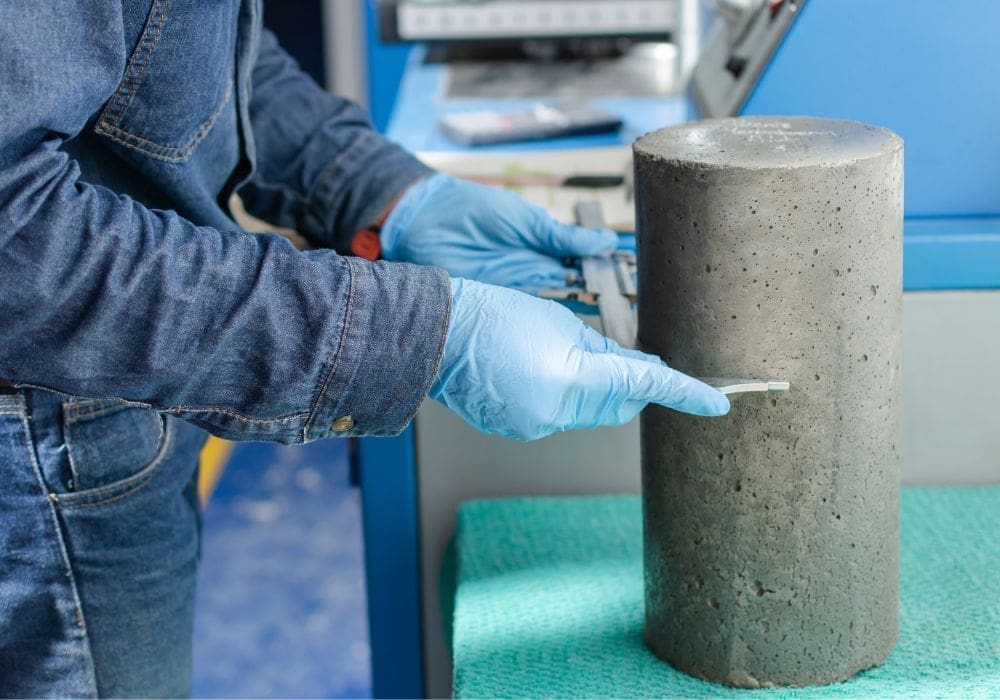
How the Unconfined Compressive Strength Test is Conducted
-
1Specimen PreparationCylindrical specimen (38mm dia × 76mm or 50mm × 100mm) trimmed from undisturbed tube sample or remoulded at field water content and density.
-
2Compression Test SetupSpecimen placed in strain-controlled compression apparatus. Deformation dial gauge/LVDT attached.
-
3Axial LoadingSpecimen compressed at 1.25% axial strain/minute until failure (> 15% strain if no clear failure).
-
4qu DeterminationPeak axial stress = qu. Mohr circle with zero confining pressure plotted. Su = qu/2.
-
5IS 1498 Classification & Reportqu classifies consistency (very soft <25kPa, soft 25–50, medium 50–100, stiff 100–200kPa+). NABL report within 3 days.
Applicable Test Standards
| Standard | Title | Scope | Type |
|---|---|---|---|
| IS 2720 Part 10 | Methods of Test for Soils — Determination of Unconfined Compressive Strength | UCS Test | Indian Standard |
| IS 1498 | Classification and Identification of Soils — Consistency Classification | Soil Classification | Indian Standard |
| IS 2911 | Code of Practice for Design and Construction of Pile Foundations | Pile Design | Indian Standard |
| ASTM D2166 | Standard Test Method for Unconfined Compressive Strength of Cohesive Soil | UCS Standard | ASTM |